In today’s digital age, marked by rapid technological advancement, the electronics and information technology industry has become a core driver of global economic growth.
Growing Importance of FPCs
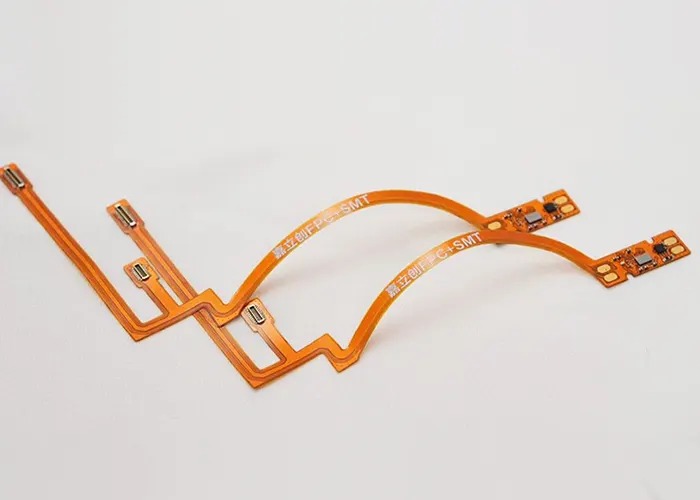
As an indispensable component of this industry, the importance of flexible printed circuit boards (FPCs) is self-evident.
Thanks to their unique advantages—such as flexibility, foldability, lightweight design, and high-density integration—FPCs are widely used in numerous fields, including smartphones, tablets, wearable devices, smart home appliances, and new energy vehicle electronics.
They have significantly driven the evolution of electronic products toward miniaturization, slimness, high performance, and multifunctionality.
As the performance of electronic devices continues to improve and their functions become increasingly diverse, market demands for FPC performance are also rising.
High-performance FPCs must possess excellent mechanical properties, thermal stability, chemical resistance, and superior electrical performance.
This places even more stringent demands on the substrates used in FPCs.
Advantages and Challenges of Acrylic Adhesives in FCCL
Among these, Flexible Copper-Clad Laminate (FCCL)—the core upstream substrate for FPCs—contains an adhesive that bonds the copper foil to the insulating base film.
This adhesive is the only component in the FCCL structure that has not yet been standardized industrially, and it directly determines the quality of the FCCL’s performance.
Currently, adhesives are primarily prepared from two major categories: epoxy and acrylic.
Compared to epoxy adhesives, acrylic adhesives feature rapid curing, which shortens production cycles and improves production efficiency.
Due to their excellent flexibility, temperature resistance, and chemical resistance, they have a broader range of applications.
Furthermore, acrylic adhesives do not require special low-temperature storage conditions and have a longer shelf life , which reduces storage costs and minimizes the risk of expiration.
More importantly, acrylic adhesives are relatively low-cost and produce minimal excess adhesive, helping to lower overall production costs.
Based on market trends and industry analysis, acrylic adhesives are increasingly preferred and have found widespread application in FPC cover films, pressure-sensitive adhesives, and insulating layers.
However, pure acrylic resins still have limitations in terms of mechanical strength, high-temperature resistance, dielectric properties (especially at high frequencies), and flame retardancy.
They cannot fully meet the stringent material performance requirements of high-end FPCs, such as low dielectric loss during high-frequency signal transmission, thermal resistance and heat dissipation needs during the operation of high-power devices, and structural stability in complex environments.
Research on Composite Modification of Acrylic Resins
To enhance the overall performance of acrylic resins and better adapt them to FPC applications, researchers have optimized them through composite modification techniques, resulting in various composite systems.
This paper systematically reviews research progress on the modification of acrylic resins for FPCs using silicones, fluorinated organics, epoxy resins, and nanomaterials, analyzing the mechanisms of action, performance improvements, and application potential of various modification methods.
Acrylic Resins for FPCs
Thermoplastic Acrylic Resins
As a key material in FPC manufacturing, thermoplastic acrylic resins derive their performance characteristics and application scenarios from their unique molecular structure.
From a molecular structural perspective, they are primarily classified into two types: linear and branched.
In thermoplastic acrylic resins with a linear structure, the molecular chains are arranged in a relatively regular pattern, and only weak van der Waals forces exist between molecules.
This confers a certain degree of flexibility to the resin; the molecular chains slide relatively easily, allowing the material to adapt to deformation through chain segment displacement when subjected to external forces.
In contrast, the branched structure increases steric hindrance within the molecular chains, making intermolecular interactions more complex.
On one hand, the side chains prevent the molecular chains from packing tightly, increasing the distance between molecules and weakening intermolecular forces;
On the other hand, the presence of side chains increases the degree of entanglement between molecular chains, which to some extent affects the material’s flowability and flexibility.
The glass transition temperature (Tg) is a key performance indicator for thermoplastic acrylic resins, typically ranging from -20°C to 100°C.
This wide range depends primarily on the composition and ratio of monomers.
In terms of solubility, thermoplastic acrylic resins exhibit good compatibility and are soluble in various organic solvents such as toluene, ethyl acetate, and acetone.
This is because polar groups in the molecular chains, such as ester groups, interact with organic solvent molecules, promoting the uniform dispersion of resin molecules in the solvent and forming a stable solution system, which facilitates subsequent processing into coatings, adhesives, and other products.
Performance and Applications in FPCs
In terms of performance, thermoplastic acrylic resins possess a certain tensile strength (typically between 10–30 MPa) and excellent elongation at break (reaching 100%–500%).
They can withstand external forces to a certain extent without fracturing easily, while also exhibiting good chemical resistance, capable of withstanding the corrosion of common chemicals such as dilute acids and dilute alkalis.
Based on these characteristics, thermoplastic acrylic resins are commonly used in the FPC industry for cover films and protective layers.
Cover films must possess sufficient flexibility and chemical resistance to shield FPC circuits from environmental influences, while protective layers must provide mechanical protection against circuit scratches.
The outstanding properties of thermoplastic acrylic resins perfectly meet these requirements.
Thermosetting Acrylic Resins
Thermosetting acrylic resins differ significantly from thermoplastic acrylic resins in terms of structure and properties, with the key distinction lying in whether their molecular structures form a cross-linked network .
Thermoplastic resins consist of linear or branched molecular chains with no cross-linked structure, whereas thermosetting resins form a three-dimensional network structure through cross-linking reactions.
Cross-Linking Density and Performance Relationship
This structural difference is primarily reflected in cross-linking density;
Generally, the higher the cross-linking density, the tighter the bonds between resin molecular chains, and the better the overall performance (such as stability and heat resistance).
Curing Mechanism and Process Conditions
Regarding curing conditions, thermosetting acrylic resins cannot be processed through the physical process of “heating to soften – cooling to set” as thermoplastic resins do, but instead require a chemical cross-linking reaction to be completed at specific temperatures and times.
Their curing temperatures generally fall within the range of 100°C to 200°C, while curing times vary from a few minutes to several hours depending on the formulation and process requirements.
Precise control of temperature and time is necessary to ensure a complete cross-linking reaction and to maximize the resin’s performance.
Table 1 lists the common types of cross-linking reactions for thermosetting acrylic resins.
Performance Advantages of Thermosetting Acrylic Resins
In terms of performance, thermosetting acrylic resins demonstrate advantages far surpassing those of thermoplastic resins due to their three-dimensional network structure, particularly in thermal stability and weather resistance.
Regarding thermal stability, their thermal decomposition temperature can reach over 200°C.
Even in high-temperature environments such as FPC soldering and high-temperature storage, they maintain structural and performance stability and are unlikely to soften or decompose;
In terms of weather resistance, after enduring long-term exposure to natural environmental conditions such as sunlight, rain, and alternating temperature and humidity, the resin exhibits minimal changes in mechanical properties, appearance, and functionality, thereby maintaining its protective role for FPCs over the long term.
Additionally, the three-dimensional cross-linked structure endows it with excellent chemical resistance and mechanical strength, enabling it to withstand the corrosion of various chemical reagents while possessing sufficient hardness and impact resistance, making it unlikely to break due to external forces.
Cross-Linking Functional Groups and Reaction Mechanisms
| Side-Chain Functional Group | Functional Monomer | Type of Crosslinking Reaction and Resin |
|---|---|---|
| Hydroxyl (-OH) | (Meth)acrylate hydroxyl ester | Thermal crosslinking with amino resins or multi-isocyanate curing at room temperature |
| Carboxyl (-COOH) | (Meth)acrylic acid, succinic acid, or itaconic acid (α-methylenedicarboxylic acid) | Thermal crosslinking with amino resins or epoxy resins |
| Epoxy (-EP) | (Meth)acrylate glycidyl ester | Polyacid or polyamine crosslinking or catalyzed thermal self-crosslinking |
| N-methylol or N-alkylol | (Meth)acrylamide N-methylol or N-alkylol derivative | ① Thermal self-crosslinking |
| Amino or amide | (Meth)acrylamide or modified by esterification/etherification | ② Thermal crosslinking with epoxy resins ③ Thermal crosslinking with amino resins |
Table 1. Crosslinking reaction types of commonly used thermosetting acrylic resins
Given these characteristics, thermosetting acrylic resins are primarily used in the bonding layer and insulating layer of substrates.
The bonding layer requires good adhesive strength to firmly bond different components such as copper foil, PI substrates, and reinforcing plates together; the insulating layer, on the other hand, must possess excellent insulating properties to prevent circuit short-circuits.
The three-dimensional network structure formed by the cross-linking of thermosetting resins provides high adhesive strength and insulating performance, meeting these application requirements for FPCs.
Study on the Composite Modification of FPC Using Acrylic Resins
In recent years, with the continuous improvement and development of polymerization technology, as well as growing emphasis on environmentally friendly products, the modification of acrylic resins has attracted widespread attention.
Researchers have conducted extensive and in-depth studies, modifying acrylic resins using silicones, fluorinated compounds, epoxy resins, and nanomaterials, and have achieved promising results.
Composite Systems of Inorganic Nanomaterials
Due to their unique size effects, surface effects, and excellent physicochemical properties, inorganic nanomaterials have become an important choice for modifying acrylic resins.
Incorporating inorganic nanofillers into acrylic resins used in flexible printed circuits (FPCs) can significantly enhance their mechanical properties, heat resistance, dielectric properties, and flame retardancy.
1. Oxide Nanomaterials
Silicon dioxide (SiO₂) nanoparticles are among the most extensively studied oxide nanomaterials.
The SiO₂ surface is rich in hydroxyl groups and can be surface-modified using silane coupling agents to improve its interfacial compatibility with the acrylic resin matrix.
Based on some research on the surface modification of SiO₂, Figure 1 clearly shows that the dispersion of nanoparticles improves with the addition of coupling agents.
Furthermore, the presence of lipophilic groups on the surface of the modified particles reduces their tendency to agglomerate.
This demonstrates that surface modification can effectively address issues related to uniform dispersion and interfacial compatibility.
![Figure 1 TEM images of nano SiO₂ before and after modification [18]](https://benlidapcba.com/wp-content/uploads/2026/04/Figure-1-TEM-images-of-nano-SiO₂-before-and-after-modification-18-300x150.webp "Figure 1 TEM images of nano SiO₂ before and after modification [18]")
Studies have shown that introducing an appropriate amount of modified SiO₂ nanoparticles into acrylic resins can effectively improve the tensile strength, elastic modulus, and impact toughness of composite materials.
TiO₂ and ZnO Nanofillers for Functional Enhancement
At the same time, the high-temperature resistance of SiO₂ helps enhance the resin’s heat deflection temperature and thermal stability.
Nanofillers such as titanium dioxide (TiO₂) and zinc oxide (ZnO) are also used to modify acrylic resins for FPCs.
TiO₂ possesses a high refractive index and UV-shielding properties; when incorporated into the composite, it enhances the weather resistance of the acrylic resin coating film.
As can be clearly seen from the test results in Table 2, the incorporation of nano-TiO₂ had little effect on the adhesion and flexural properties of the acrylic emulsion film, but it improved the film’s impact resistance, pencil hardness, UV aging resistance, and thermal stability.
ZnO, on the other hand, has application potential in specific functional FPC fields due to its antibacterial and conductive properties.
| TiO₂ Dosage (% by mass) | Impact Performance / cm | Adhesion Level | Flexibility / mm | Pencil Hardness | Gloss / % |
|---|---|---|---|---|---|
| 72h | 144h | 72h | 144h | 72h | |
| 0 | 40 | 36 | 0 | 0 | 2 |
| 1 | 43 | 43 | 0 | 0 | 2 |
| 2 | 43 | 38 | 0 | 0 | 2 |
| 3 | 41 | 41 | 0 | 0 | 2 |
| 4 | 45 | 42 | 0 | 0 | 2 |
Table 2. Properties of UV-Aged Nano-TiO₂ Modified Acrylic Emulsion Films
2. Carbon Nanomaterials
Carbon nanomaterials refer to carbon materials in which at least one dimension of the dispersed phase is less than 100 nm.
They are classified into zero-dimensional (0D), one-dimensional (1D), two-dimensional (2D), and three-dimensional (3D) carbon materials.
Major examples include carbon nanotubes (CNTs), graphene, and its derivatives (such as graphene oxide, GO), which exhibit extremely high mechanical strength as well as excellent electrical and thermal conductivity.
Figure 2 shows carbon nanomaterials of different dimensions.
![Figure 2 Carbon nanomaterials of different dimensions [27]](https://benlidapcba.com/wp-content/uploads/2026/04/Figure-2-Carbon-nanomaterials-of-different-dimensions-27-300x82.webp "Figure 2 Carbon nanomaterials of different dimensions [27]")
As one-dimensional nanomaterials, carbon nanotubes (CNTs) have a high aspect ratio and can effectively enhance the mechanical properties of composite materials.
Improving the interfacial bonding between CNTs and acrylic resins through covalent or non-covalent modification can significantly increase the tensile strength and elongation at break of the composites.
CNTs possess excellent thermal conductivity; even a small amount can enhance the thermal conductivity of acrylic resins, aiding in heat dissipation for FPCs.
However, care must be taken to control the loading level, as excessive amounts may lead to increased dielectric loss, which is detrimental to high-frequency applications.
Some experimental results showed that when the MWCNT loading was 0.75 wt%, the thermal conductivity of the styrene-acrylic resin was 0.1644 W/(m·K), representing a 24.26% improvement; further addition of 0.75 wt% graphene increased the thermal conductivity to 0.2093 W/(m·K), representing a 67.61% increase.
This is because CNTs and graphene can form bridges, enabling the composite fillers to create a connected thermal network within the styrene-acrylic resin, thereby further enhancing the thermal conductivity of the composite material.
Graphene-Enhanced Acrylic Resin Systems
As a two-dimensional nanomaterial, graphene possesses superior mechanical properties and thermal conductivity compared to CNTs.
The surface of graphene oxide contains a large number of oxygen-containing functional groups, which can form hydrogen bonds or covalent bonds with polar groups in acrylic resins, thereby significantly improving interfacial compatibility as well as mechanical and thermal properties. Introducing graphene or functionalized graphene into acrylic resins can substantially enhance the mechanical properties and heat resistance of the composite materials.
Testing revealed that the addition of GO significantly improved the mechanical, thermal, and chemical resistance properties of the acrylic resin, as well as its adhesion.
Additionally, the layered structure of graphene forms a physical barrier that slows the transfer of heat and oxygen, thereby enhancing the flame-retardant properties of the composite.
In the field of flexible printed circuits (FPCs), heat dissipation and signal transmission are critical issues.
As the performance of electronic devices continues to improve, FPCs generate increasing amounts of heat;
Effective heat dissipation ensures the stability and reliability of electronic devices.
At the same time, efficient signal transmission places higher demands on the electrical conductivity of FPCs. Graphene-reinforced acrylic resins can effectively meet these requirements and hold broad application potential.
Organic-Organic Composite Systems
1. Composites with Epoxy Resins
Epoxy resins possess excellent adhesion, mechanical properties, and heat resistance, but lack flexibility.
By combining acrylic resins with epoxy resins, the advantages of both can be combined to produce composite materials that offer good flexibility along with high strength and heat resistance, making them suitable for the bonding layer and cover film of FPCs.
The primary methods of compounding include physical blending and chemical copolymerization (such as the reaction of epoxy groups with carboxyl or hydroxyl groups in acrylic resins).
By adjusting the appropriate ratio of acrylic resin to epoxy resin, it is possible to retain the high strength and heat resistance of the epoxy resin while utilizing the flexibility of the acrylic resin, thereby significantly increasing the elongation at break of the composite material to meet the bending requirements of FPCs.
2. Blending with Silicone Resins
Silicone resins offer exceptional resistance to high and low temperatures, weather resistance, hydrophobicity, and low dielectric properties.
Blending them with acrylic resins can significantly improve the heat resistance, water resistance, and dielectric properties of the acrylic resins.
Furthermore, because the silicone segments (-Si-O-) are highly compatible with acrylate groups—allowing for mutual penetration and entanglement—the silicone segments can be uniformly dispersed within the acrylic resin matrix during the compounding process, forming a stable composite system.
Figure 3 shows silicone polymers commonly used in silicone-modified systems.
![Figure 3 Silicone modified acrylic silicone polymer [10]](https://benlidapcba.com/wp-content/uploads/2026/04/Figure-3-Silicone-modified-acrylic-silicone-polymer-10-300x115.webp "Figure 3 Silicone modified acrylic silicone polymer [10]")
The performance of the composite acrylic resin has been significantly improved.
Due to the high bond energy and thermal stability of the silicone segments, a stable silica protective film forms at high temperatures, preventing further degradation of the resin by oxygen and heat, protecting the resin matrix from decomposition, and enhancing thermal stability.
The silicone-modified acrylic coatings produced from this emulsion exhibited a water contact angle of 94°, and outperformed pure acrylic coatings in terms of mechanical durability, alkali resistance, and salt corrosion resistance.
These performance advantages are particularly important for FPC applications in outdoor and high-humidity environments.
In outdoor environments, FPCs must withstand various challenges such as high temperatures, ultraviolet radiation, and rain, while high-humidity environments can easily lead to moisture absorption and material aging. Silicone-modified acrylic resins can effectively improve the performance stability and reliability of FPCs in these harsh environments, providing a strong guarantee for their application in outdoor and high-humidity settings.
3. Composites with Organofluororesins
Fluororesins possess extremely low surface energy, excellent chemical resistance, weather resistance, and low dielectric properties.
By introducing fluororesins or fluorinated monomers into acrylic resin systems, composite resins with low surface energy, stain resistance, chemical resistance, and low dielectric properties can be produced.
These resins are suitable for FPCs that require stringent environmental resistance and high-frequency dielectric performance.
The reaction mechanism between the fluorocarbon modifier and the acrylic resin is shown in Figure 4.
![Figure 4 Schematic diagram of the reaction mechanism between fluorocarbon modifiers and acrylic resins [57]](https://benlidapcba.com/wp-content/uploads/2026/04/Figure-4-Schematic-diagram-of-the-reaction-mechanism-between-fluorocarbon-modifiers-and-acrylic-resins-57-300x75.webp "Figure 4 Schematic diagram of the reaction mechanism between fluorocarbon modifiers and acrylic resins [57]")
Overall Outlook
Although significant breakthroughs have been achieved in the research on acrylic resin composite systems for FPCs in terms of key indicators such as mechanical properties, heat resistance, and dielectric properties, certain bottlenecks remain.
In inorganic nanomaterial composite systems, the dispersion of nanoparticles is a critical issue.
Nanoparticles possess high specific surface areas and surface energies, making them prone to agglomeration.
This leads to uneven dispersion within the resin matrix, hindering their full reinforcing potential and affecting the stability of material performance.
Although graphene offers excellent properties, its complex preparation process results in high production costs.
Additionally, the issue of increased dielectric loss caused by excessive CNT addition limits the large-scale application of carbon-based fillers and hinders their widespread adoption in the FPC industry.
In organic-organic composite systems, the ratio in epoxy-acrylic composites must be precisely controlled to balance strength and flexibility; while silicone composites exhibit good compatibility, there remains a risk of phase separation under specific conditions.
Fluororesin composites face challenges due to the high cost and large consumption of fluorinated monomers; increasing fluorine content weakens the resin’s mechanical strength, leading to an imbalance between hydrophobicity, flexibility, and adhesion.
Additionally, they are subject to environmental regulations, and during the transition to solvent-free formulations, fluorinated monomers exhibit poor dispersibility.
Future Development Trends
To address these issues, future research on acrylic resins for FPCs can be developed in the following directions.
In terms of high performance, the use of multi-powder synergistic modification is an important trend.
By combining various functional powders—such as nanomaterials, graphene, and organosilicon—with acrylic resins, the advantages of each powder can be fully leveraged to achieve synergistic improvements in material performance.
From an environmental perspective, the development of solvent-free acrylic resins is an inevitable requirement.
As environmental awareness grows, reducing emissions of volatile organic compounds has become a trend in industry development.
Solvent-free resins not only reduce environmental pollution but also enhance safety during the production process.
Functional integration is another key direction, aiming to combine properties such as thermal conductivity, weather resistance, flame retardancy, and low dielectric constant into a single material.
Through molecular design and inorganic-organic multi-component synergy, the material’s structure and properties can be precisely controlled, enabling acrylic resins for FPCs to meet the diverse performance requirements of electronic devices simultaneously.