Introduction — Why Hardware Development Is Slower Than Ever
Modern electronics are evolving at an extraordinary pace. Devices are becoming smaller, faster, more connected, and increasingly intelligent. From AI edge devices and industrial IoT systems to wearable electronics and automotive control modules, today’s products demand higher-density PCB layouts, tighter tolerances, and more sophisticated manufacturing processes.
At the same time, the path from PCB design to mass production has become significantly more difficult.
Hardware teams are no longer struggling only with engineering complexity. They are also dealing with global component shortages, unstable lead times, fragmented supply chains, BOM management issues, and compressed launch schedules.
Even a relatively simple board can involve dozens of suppliers, procurement channels, logistics providers, and manufacturing partners spread across multiple countries.
Recent industry reports show that PCB assembly demand continues to grow rapidly due to AI infrastructure, cloud computing, IoT devices, and high-performance electronics.
The global PCBA market was valued at nearly USD 99 billion in 2025 and is projected to exceed USD 137 billion by 2033.
However, growth in demand has also exposed weaknesses in the electronics manufacturing ecosystem.
Component shortages remain one of the biggest obstacles for hardware teams. Industry data indicates that lead times for certain semiconductors and specialized components have extended from the traditional 8–12 weeks to as long as 26–52 weeks in some categories.
In parallel, geopolitical instability and material shortages have pushed PCB prices sharply upward in recent years. Reuters reported that some PCB material costs increased by as much as 40% during recent supply chain disruptions.
This leads to a critical question for modern hardware companies:
How can engineering teams move from PCB design to production faster without increasing manufacturing risk, cost overruns, or quality failures?
For many companies, the answer is increasingly found in turnkey PCB assembly.
Instead of managing multiple vendors independently, turnkey manufacturing consolidates sourcing, fabrication, assembly, testing, and logistics into a single coordinated workflow.
In an environment where delays often come from communication gaps rather than engineering itself, this model has become one of the most effective ways to accelerate hardware development while maintaining production reliability.
What Is Turnkey PCB Assembly?
The word “turnkey” originally comes from the construction industry. It describes a service model where the client receives a fully completed project that is ready to use immediately — simply “turn the key” and start operating.
In electronics manufacturing, turnkey PCB assembly follows the same principle.
Under a turnkey model, a single manufacturing partner manages the entire production process, including:
| Manufacturing Stage | Included in Turnkey Service |
|---|---|
| PCB fabrication | Yes |
| Electronic component sourcing | Yes |
| SMT/THT assembly | Yes |
| Functional testing | Yes |
| Inspection and quality control | Yes |
| Packaging and delivery | Yes |
Instead of coordinating separately with PCB fabricators, component distributors, assembly houses, and testing vendors, the customer works with one centralized supplier.
A simple analogy is hiring a general contractor to build an entire house. Rather than managing electricians, plumbers, carpenters, and painters independently, the homeowner works with one team responsible for coordinating the full project.
The same principle applies to PCB manufacturing.
The customer focuses on product development, firmware, system architecture, and market strategy, while the turnkey manufacturer handles procurement, production scheduling, manufacturing engineering, assembly execution, inspection, and logistics.
This approach has become increasingly valuable as electronics manufacturing grows more complex.
Taiwan’s EMS market, for example, shows particularly strong growth in hybrid and turnkey manufacturing models because companies are prioritizing vertically integrated services that shorten time-to-market.
Why Traditional PCB Manufacturing Creates Bottlenecks
Many hardware companies underestimate how much time is lost not in engineering, but in manufacturing coordination.
Traditional PCB production often relies on multiple disconnected suppliers, each responsible for only one portion of the process.
While this structure may appear flexible initially, it frequently creates delays, quality risks, and communication failures during scaling.
Vendor Fragmentation Creates Operational Complexity
In a traditional workflow, companies may use:
- One factory for PCB fabrication
- Multiple distributors for component sourcing
- Another company for SMT assembly
- Separate testing vendors
- Different logistics providers
Each supplier operates on its own schedule, system, and communication process.
When problems arise, responsibility becomes difficult to identify.
If soldering defects occur, the assembly house may blame PCB quality. Component failures during testing may raise concerns among procurement teams about sourcing authenticity.
If footprints mismatch, engineers may need to coordinate between CAD designers, sourcing teams, and manufacturing engineers simultaneously.
This fragmentation significantly slows product development cycles.
By contrast, turnkey assembly centralizes accountability into one manufacturing partner, reducing coordination overhead and accelerating issue resolution.
BOM Sourcing Has Become a Major Engineering Risk
Component procurement is no longer a simple purchasing task.
Modern BOM management requires continuous monitoring of:
- Component availability
- Lifecycle status
- Lead times
- Counterfeit risks
- Alternate part compatibility
- Pricing volatility
Shortages in microcontrollers, PMICs, sensors, and wireless modules have forced many hardware teams into unexpected redesigns during late-stage development.
The risk is especially severe when products rely on single-source components.
If one IC becomes unavailable during production preparation, the consequences may include:
- PCB redesign
- Firmware modification
- New qualification testing
- Delayed certification
- Missed launch schedules
Turnkey manufacturers often reduce this risk through established supplier networks, approved vendor systems, and proactive sourcing strategies. Many also evaluate alternate components during DFM review before production begins.
Engineering Problems Are Often Discovered Too Late
One of the most expensive problems in electronics manufacturing is discovering manufacturability issues after procurement or assembly has already started.
Common examples include:
| Engineering Problem | Production Impact |
|---|---|
| Incorrect footprints | Assembly failure |
| Incompatible package sizes | Rework delays |
| Thermal design problems | Reliability issues |
| Poor panelization | Lower manufacturing yield |
| Insufficient test points | Difficult debugging |
| Incorrect stencil design | Solder defects |
As PCB densities increase and component sizes shrink, manufacturing tolerances become more critical. Research on SMT assembly processes shows that even small placement shifts can significantly affect defect rates in modern miniaturized assemblies.
Turnkey providers typically integrate DFM (Design for Manufacturability) analysis earlier in the production process.
Because sourcing, fabrication, and assembly teams operate within the same organization, potential problems can often be identified before manufacturing begins.
This reduces costly engineering change orders during later stages of production.
Communication Losses Quietly Destroy Timelines
Many hardware delays are not caused by technical failures at all.
They are caused by communication inefficiencies.
When manufacturing involves multiple independent suppliers, teams frequently encounter:
- Delayed email responses
- Time-zone gaps
- Inconsistent documentation
- Version control confusion
- Unclear ownership of problems
- Procurement misunderstandings
A single unresolved question about a BOM line item can halt production scheduling for days.
For startups and smaller engineering teams, these communication gaps can become devastating because they often lack dedicated supply-chain personnel.
In turnkey manufacturing models, communication channels are centralized. Engineering feedback, sourcing updates, assembly status, and quality reports are typically managed through one coordinated workflow instead of multiple disconnected conversations.
A Realistic Example of How Delays Escalate
Consider a startup preparing its first production run for an IoT gateway device.
The engineering team finalizes the PCB design and sends Gerber files to a fabrication house. Simultaneously, procurement begins ordering components from multiple distributors.
Two weeks later, a critical power-management IC suddenly becomes unavailable with a 36-week lead time.
The replacement part uses a different footprint.
Now the company must:
- Redesign the PCB layout
- Update the schematic library
- Reorder prototypes
- Validate thermal performance again
- Modify firmware power sequencing
- Delay assembly scheduling
What originally looked like a minor procurement issue becomes a six-week delay across the entire development cycle.
Situations like this have become increasingly common in modern electronics manufacturing due to unstable supply chains and growing component complexity.
This is precisely why many companies are moving toward turnkey PCB assembly partners that integrate sourcing intelligence directly into the manufacturing workflow.
How Turnkey PCB Assembly Actually Works (Step-by-Step)
One of the biggest misconceptions about turnkey PCB assembly is that it simply combines PCB fabrication and component purchasing into a single service.
In reality, modern turnkey manufacturing is a tightly coordinated engineering and supply-chain system designed to reduce production risk at every stage.
From the moment a customer uploads design files to the final shipment of assembled boards, every process is interconnected.
The quality of sourcing affects assembly stability. PCB fabrication impacts solder reliability. Testing strategy influences long-term field performance.
Understanding how the turnkey workflow operates helps explain why many electronics companies now view manufacturing integration as a strategic advantage rather than just a procurement convenience.
4.1 File Submission
The process begins with engineering data submission.
A professional turnkey PCB assembly provider typically requires several key manufacturing files:
| File Type | Purpose |
|---|---|
| Gerber files | Define PCB copper layers, solder mask, silkscreen, and drilling |
| BOM (Bill of Materials) | Lists all electronic components and specifications |
| Pick-and-place (CPL) files | Provide exact component placement coordinates |
| Assembly drawings | Clarify orientation, polarity, and special assembly instructions |
| Test requirements | Define functional or electrical testing expectations |
Among these, the BOM is often the most critical.
Modern BOMs may contain hundreds or even thousands of line items, many of which face fluctuating availability, lifecycle uncertainty, or counterfeit risks.
Industry reports indicate that counterfeit electronic components continue to represent a major challenge in global electronics manufacturing, particularly during periods of supply shortage. (oecd.org)
Because of this, turnkey manufacturers increasingly treat BOM analysis as both an engineering and supply-chain task rather than a simple purchasing operation.
4.2 Engineering Review
After receiving the production files, the manufacturer performs a detailed engineering review.
This stage is essential because many PCB failures originate not from manufacturing defects, but from design decisions that reduce manufacturability or assembly reliability.
The review generally includes:
| Engineering Review Area | Objective |
|---|---|
| DFM (Design for Manufacturability) | Ensure the PCB can be fabricated reliably |
| DFA (Design for Assembly) | Verify components can be assembled efficiently |
| Component verification | Confirm package compatibility and sourcing status |
| Panelization review | Optimize production efficiency |
| Thermal analysis | Reduce overheating risks |
| Testability review | Ensure debugging and validation access |
DFM analysis has become increasingly important as electronics move toward miniaturization and high-density packaging. IPC standards emphasize that early manufacturability validation can significantly reduce defect rates and rework costs in SMT production environments. (ipc.org)
For example, insufficient solder mask clearance, poorly designed thermal pads, or incorrect stencil openings can create yield problems that only become visible during mass production.
By identifying these issues early, turnkey manufacturers help prevent costly engineering revisions later in the process.
4.3 Intelligent Component Sourcing
This is where modern turnkey PCB assembly differs dramatically from traditional contract manufacturing.
In the past, sourcing primarily involved placing purchase orders through distributors. Today, component procurement has become a highly data-driven operation influenced by inventory volatility, geopolitical risks, and lifecycle management.
Leading turnkey providers now rely on several integrated sourcing systems:
| Modern Sourcing Capability | Purpose |
|---|---|
| Global distributor networks | Access worldwide component inventory |
| Real-time inventory systems | Monitor stock fluctuations instantly |
| Alternative component databases | Identify drop-in replacements |
| Lifecycle monitoring tools | Detect obsolete components early |
| Approved vendor systems | Reduce counterfeit risks |
This evolution became especially important after the COVID-19 pandemic disrupted global semiconductor supply chains. According to industry analysis from the U.S. Department of Commerce, some semiconductor lead times increased beyond 26 weeks during peak shortages. (commerce.gov)
As a result, strong sourcing capability is now considered just as important as SMT production capacity.
A factory with advanced assembly equipment but weak sourcing infrastructure may still fail to deliver products on schedule.
Many turnkey providers now maintain dedicated procurement engineering teams that continuously evaluate:
- Alternate part qualification
- Supply-chain resilience
- Multi-region sourcing options
- Risk exposure for critical components
This integration between engineering and procurement is one of the primary reasons turnkey manufacturing can reduce production delays.
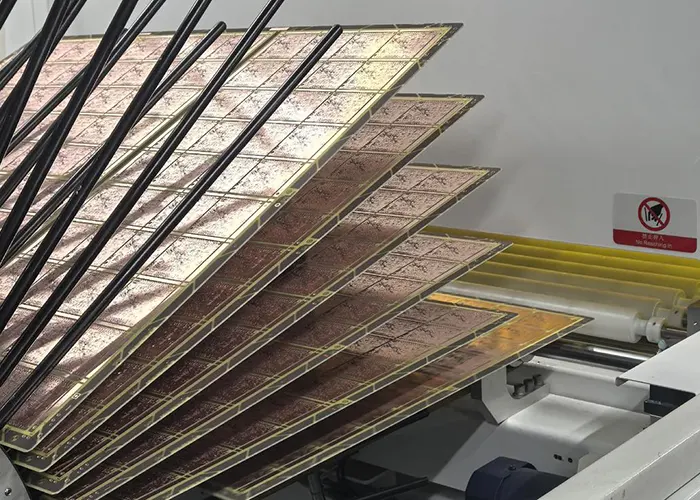
4.4 PCB Fabrication
Once the design passes engineering validation and critical components are secured, bare-board fabrication begins.
This process transforms digital PCB data into physical circuit boards through multiple precision manufacturing stages, including:
- Inner-layer imaging
- Etching
- Lamination
- Drilling
- Copper plating
- Solder mask application
- Surface finishing
Modern PCB fabrication requires extremely tight process control, especially for multilayer and high-speed designs.
Important manufacturing considerations include:
| Fabrication Parameter | Importance |
|---|---|
| Layer stackup accuracy | Signal integrity and impedance control |
| Copper thickness | Current-carrying capability |
| Surface finish | Solderability and corrosion resistance |
| Hole quality | Electrical reliability |
| Registration accuracy | Multilayer alignment |
Surface finishes such as ENIG (Electroless Nickel Immersion Gold), HASL, immersion silver, and OSP are selected based on reliability requirements, assembly conditions, and product application.
For high-frequency or high-speed applications, stackup consistency becomes especially critical because impedance variation can directly affect signal performance.
4.5 SMT & THT Assembly
After PCB fabrication and component sourcing are completed, assembly begins.
Surface Mount Technology (SMT) is the dominant assembly process used in modern electronics manufacturing due to its speed, precision, and suitability for high-density boards.
The SMT workflow typically includes:
- Solder paste printing
- Automated pick-and-place
- Reflow soldering
- Optical inspection
High-speed pick-and-place machines can position tens of thousands of components per hour with micron-level precision.
However, many products still include Through-Hole Technology (THT) components for connectors, transformers, power devices, or mechanically stressed parts.
These components may require:
- Wave soldering
- Selective soldering
- Manual soldering processes
According to IPC manufacturing studies, solder joint integrity remains one of the most critical reliability factors in electronics assembly. (ipc.org)
This is why process consistency, stencil design, thermal profiling, and component placement accuracy are so important in turnkey production environments.
4.6 Inspection & Quality Control
Inspection is not a single step at the end of production. In professional turnkey manufacturing, quality control is integrated throughout the entire workflow.
Advanced PCB assembly providers typically combine several inspection methods:
| Inspection Method | Purpose |
|---|---|
| AOI (Automated Optical Inspection) | Detect visible solder and placement defects |
| X-ray inspection | Inspect hidden joints such as BGAs |
| Flying probe testing | Verify electrical continuity |
| ICT (In-Circuit Testing) | Validate circuit-level functionality |
| Functional testing | Simulate real operating conditions |
AOI systems use high-resolution imaging to identify defects such as:
- Missing components
- Tombstoning
- Solder bridges
- Polarity errors
- Misalignment
Meanwhile, X-ray inspection is essential for modern packages like BGA and QFN, where solder joints are hidden beneath the component body.
Industry reliability research consistently shows that early defect detection dramatically reduces downstream repair costs. Some manufacturing studies estimate that fixing defects after final assembly may cost 10–100 times more than correcting them during production. (asq.org)
4.7 Final Delivery
Once assembly and testing are complete, the products move to packaging and shipment.
This stage may appear simple, but it also requires careful control to avoid damage during transportation and storage.
Final delivery processes often include:
- ESD-safe packaging
- Moisture-sensitive device protection
- Vacuum sealing
- Barcode labeling
- Traceability documentation
- Export logistics coordination
For global hardware companies, logistics visibility has become increasingly important.
Modern turnkey providers frequently support direct shipment to:
- Distribution centers
- System integrators
- Contract manufacturers
- End customers
This helps reduce additional warehousing and handling steps.
Full Turnkey vs Partial Turnkey vs Consigned Assembly
Not every company requires the same manufacturing model.
Depending on supply-chain strategy, purchasing power, regulatory requirements, and internal engineering capabilities, companies typically choose between three primary PCB assembly approaches.
| Factor | Full Turnkey | Partial Turnkey | Consigned Assembly |
|---|---|---|---|
| Component sourcing | Manufacturer handles all sourcing | Shared between customer and manufacturer | Customer supplies all components |
| Supply-chain management | Centralized | Shared responsibility | Customer-managed |
| Lead-time control | High | Medium | Depends on customer procurement |
| Cost optimization | Strong for small/mid-volume | Flexible | Potentially better for large OEMs |
| Counterfeit risk control | Manufacturer-managed | Shared | Customer-managed |
| Engineering support | Extensive | Moderate | Limited |
| Best suited for | Startups, SMEs, fast NPI | Growing hardware companies | Defense, aerospace, medical |
Which Model Fits Different Companies?
The best manufacturing model depends heavily on organizational structure and supply-chain maturity.
Startups and Small Hardware Teams
Startups typically benefit most from full turnkey assembly.
Smaller teams often lack:
- Dedicated procurement departments
- Supplier qualification systems
- Global sourcing networks
- Manufacturing engineering resources
Full turnkey providers reduce operational complexity while accelerating product launches.
This is particularly valuable during NPI (New Product Introduction), where rapid iteration and fast debugging are critical.
Large OEMs and Established Electronics Brands
Larger companies may prefer partial turnkey models.
These organizations often maintain strategic inventory agreements with semiconductor vendors or possess long-term pricing contracts for critical components.
In such cases, the OEM may supply key ICs while the manufacturer sources passive components and standard parts.
This hybrid approach balances supply-chain control with manufacturing efficiency.
Defense, Aerospace, and Medical Electronics
Highly regulated industries frequently use consigned assembly models.
The reason is traceability.
Defense and medical manufacturers often require strict control over:
- Approved component vendors
- Lot traceability
- Compliance documentation
- Long-term inventory management
In these sectors, maintaining direct ownership of components may be more important than maximizing manufacturing convenience.
The Biggest Benefits of Turnkey PCB Assembly
The rapid growth of turnkey PCB assembly is not simply a trend. It reflects broader structural changes in the electronics industry.
As products become more complex and supply chains more volatile, integrated manufacturing models provide several major competitive advantages.
6.1 Faster Time-to-Market
Time-to-market has become one of the most important competitive metrics in hardware development.
Traditional manufacturing workflows often create delays because PCB fabrication, sourcing, and assembly occur sequentially across separate vendors.
Turnkey manufacturing enables parallel workflows.
While engineering reviews are being completed, sourcing teams can begin component verification. While bare boards are fabricated, logistics planning and test preparation may already be underway.
This overlap reduces idle time between production stages.
For consumer electronics and IoT products, even a few weeks of acceleration can significantly improve market competitiveness.
6.2 Lower Total Manufacturing Cost
Many companies initially evaluate PCB assembly based only on unit price.
However, the total manufacturing cost includes much more than assembly labor alone.
Turnkey manufacturing often reduces overall cost through:
| Cost Reduction Area | Impact |
|---|---|
| Bulk component sourcing | Lower purchasing prices |
| Consolidated logistics | Reduced shipping expenses |
| Fewer vendor interactions | Lower management overhead |
| Early DFM validation | Reduced rework costs |
| Centralized testing | Lower defect-related expenses |
Research from supply-chain management studies consistently shows that operational coordination inefficiencies can significantly increase hidden manufacturing costs. (mckinsey.com)
6.3 Reduced Supply Chain Risk
One of the most important post-pandemic trends in electronics manufacturing is the shift toward supply-chain resilience.
The COVID-19 crisis exposed how vulnerable global electronics production had become to component shortages, transportation disruptions, and regional shutdowns.
As a result, many companies now prioritize supply-chain stability over purely minimizing production cost.
Turnkey PCB assembly supports this shift because integrated manufacturers can:
- Monitor inventory risks earlier
- Coordinate alternate sourcing faster
- Consolidate procurement visibility
- Respond to shortages more quickly
This is especially important in industries with short product life cycles.
6.4 Better Product Quality
Quality control becomes significantly more difficult when manufacturing responsibilities are fragmented across multiple vendors.
In traditional workflows, defects may pass between suppliers without clear accountability.
Turnkey manufacturing centralizes quality management under one system.
This typically results in:
- Unified inspection standards
- Better traceability
- Faster root-cause analysis
- Consistent process documentation
- More stable production yields
Because fabrication, sourcing, assembly, and testing are interconnected, manufacturers can identify process interactions more effectively.
6.5 Easier Scaling from Prototype to Mass Production
Many hardware startups successfully build prototypes but struggle during production scaling.
The transition from prototype to volume manufacturing introduces new challenges:
- Yield optimization
- Process repeatability
- Supply-chain stability
- Test automation
- Production scheduling
Turnkey providers often support smoother NPI-to-production transitions because they maintain continuity across all manufacturing stages.
This continuity reduces the risk of unexpected process variation when production volumes increase.
Common Mistakes Companies Make When Choosing a Turnkey PCB Partner
Selecting a turnkey PCB assembly provider is no longer simply about finding the lowest quote.
As electronics supply chains become more complex, the wrong manufacturing partner can create delays, quality failures, sourcing problems, and scaling limitations that far outweigh initial cost savings.
Mistake #1: Choosing Only Based on Price
Low pricing can sometimes hide significant risks.
Some manufacturers reduce costs by:
- Using lower-grade materials
- Limiting inspection procedures
- Outsourcing sourcing to unverified channels
- Reducing engineering review depth
These shortcuts may not become visible until field failures occur.
In electronics manufacturing, poor quality often creates exponentially higher downstream costs through warranty claims, redesigns, recalls, and reputation damage.
Mistake #2: Ignoring Supply Chain Capability
In today’s market, sourcing capability may be more important than assembly capacity itself.
A factory with advanced SMT equipment but weak procurement systems can still fail to deliver products on schedule.
Companies should evaluate whether a turnkey provider has:
- Strong distributor relationships
- Real-time inventory visibility
- Alternate component expertise
- Counterfeit prevention systems
- Lifecycle management capability
Without these systems, production stability becomes vulnerable during shortages.
Mistake #3: Weak DFM Support
Some assembly providers simply manufacture exactly what customers send without performing meaningful engineering analysis.
This creates major risk.
Weak DFM support can allow manufacturability problems to remain hidden until:
- SMT production
- Functional testing
- Reliability validation
- Mass production scaling
By that stage, redesign costs become far more expensive.
Mistake #4: No Testing Strategy
Testing is often underestimated during early-stage product development.
However, inadequate testing can transform low-cost assembly into expensive product failures later.
Professional turnkey manufacturers should support appropriate testing strategies based on product complexity, including:
- AOI
- ICT
- Flying probe
- Functional testing
- Burn-in testing when necessary
The more complex the product, the more critical testing becomes.
Mistake #5: No Scalability Planning
A manufacturer that handles prototype quantities successfully may not be capable of supporting volume production.
This is a common mistake among startups.
Prototype success does not automatically guarantee:
- Stable production yield
- Scalable sourcing
- Automated testing capability
- Mass-production scheduling
- Long-term consistency
Companies should evaluate whether the manufacturer can support both early development and future scaling phases.
How to Choose the Right Turnkey PCB Assembly Manufacturer
As turnkey PCB assembly becomes increasingly central to modern hardware development, choosing the right manufacturing partner has become a strategic business decision rather than a simple procurement task.
A PCB assembly provider is no longer responsible only for soldering components onto boards. Today’s manufacturers directly influence:
- Product quality
- Supply-chain resilience
- Time-to-market
- Engineering efficiency
- Long-term scalability
The wrong partner can create hidden production bottlenecks, sourcing instability, and expensive quality failures. The right partner, however, can significantly accelerate product development while reducing operational risk.
For this reason, companies should evaluate turnkey PCB manufacturers across several critical dimensions.
Engineering Support Matters More Than Many Companies Realize
Strong engineering support is one of the clearest indicators of a capable turnkey manufacturer.
Many production failures originate not from assembly itself, but from design decisions that reduce manufacturability or reliability. A manufacturer with experienced DFM and DFA engineers can identify these issues before production begins.
This includes reviewing:
| Engineering Capability | Why It Matters |
|---|---|
| DFM analysis | Prevents fabrication and soldering defects |
| DFA validation | Improves assembly efficiency and yield |
| Thermal evaluation | Reduces overheating and reliability risks |
| Stackup review | Protects signal integrity |
| Component compatibility checks | Prevents footprint and package issues |
According to IPC manufacturing guidance, early-stage manufacturability review can substantially reduce downstream rework and defect-related costs in SMT production environments.
A strong engineering team also becomes increasingly important for advanced PCB technologies such as HDI layouts, fine-pitch BGAs, RF circuits, and high-speed digital designs.
Manufacturing Capability Determines Production Flexibility
Not all PCB assembly facilities are equipped to handle the same level of complexity.
Some manufacturers focus primarily on low-cost consumer products, while others specialize in industrial electronics, medical systems, automotive modules, or aerospace-grade assemblies.
Evaluating manufacturing capability requires understanding both equipment and process maturity.
Key areas include:
| Manufacturing Capability | Importance |
|---|---|
| High-speed SMT lines | Essential for modern dense assemblies |
| THT assembly support | Needed for power and mechanical components |
| HDI production capability | Critical for miniaturized electronics |
| Fine-pitch BGA handling | Important for advanced processors and chipsets |
| Automated optical inspection | Improves defect detection |
| X-ray inspection systems | Required for hidden solder joints |
Modern SMT production lines can place tens of thousands of components per hour with extremely high precision. However, equipment alone does not guarantee quality. Process control, thermal profiling, stencil optimization, and operator expertise remain equally important.
For complex products, companies should also verify whether the manufacturer can support:
- Prototype production
- NPI validation
- Mid-volume scaling
- Full mass production
A factory optimized only for prototyping may struggle with volume consistency later.
Quality Certifications Are More Than Marketing Labels
Quality certifications provide insight into how systematically a manufacturer controls production processes.
The most widely recognized certifications in PCB assembly include:
| Certification | Purpose |
|---|---|
| ISO 9001 | Quality management systems |
| IPC-A-610 | Electronics assembly acceptability standards |
| RoHS compliance | Restriction of hazardous substances |
| ISO 13485 | Medical device manufacturing |
| IATF 16949 | Automotive quality systems |
IPC standards, in particular, play a major role in global electronics manufacturing because they define workmanship criteria for soldering quality, inspection standards, and assembly reliability. (ipc.org)
For industries such as aerospace, automotive, and medical electronics, certification requirements become even stricter because reliability failures can create serious safety risks.
Companies should therefore evaluate whether certifications are actively integrated into manufacturing processes or simply displayed as marketing credentials.
Supply Chain Strength Has Become a Competitive Advantage
Over the past several years, supply-chain capability has become one of the most important differentiators between PCB assembly providers.
The COVID-19 pandemic, semiconductor shortages, and geopolitical disruptions revealed that sourcing stability can directly determine whether products launch on time.
According to U.S. Department of Commerce findings, semiconductor inventory buffers dropped to critically low levels during recent shortages, leaving many manufacturers vulnerable to production interruptions. (commerce.gov)
As a result, modern turnkey providers increasingly compete based on procurement intelligence rather than assembly labor costs alone.
Companies should evaluate whether a manufacturer has:
| Supply Chain Capability | Strategic Value |
|---|---|
| Authorized distributor partnerships | Reduces counterfeit risks |
| Real-time inventory visibility | Improves sourcing speed |
| Alternative component databases | Reduces shortage impact |
| Traceability systems | Supports quality and compliance |
| Lifecycle monitoring tools | Prevents obsolescence issues |
Strong sourcing infrastructure is especially critical for products that depend on specialized semiconductors, wireless modules, or automotive-grade components.
Communication and Project Management Influence Delivery Speed
Even technically capable manufacturers can create delays if communication processes are weak.
In global electronics manufacturing, projects often involve multiple engineering revisions, sourcing updates, and production schedule adjustments. Poor communication can easily introduce confusion, especially across different time zones.
Professional turnkey manufacturers typically provide:
- Dedicated account managers
- Centralized project coordination
- Rapid engineering feedback
- Real-time production updates
- Structured documentation systems
Fast response speed is particularly important during NPI phases, where engineering iterations may occur frequently.
Many successful hardware companies now evaluate manufacturers not only by price or equipment, but also by how efficiently they communicate and resolve problems.
Emerging Trends in Turnkey PCB Assembly
Turnkey PCB assembly is evolving rapidly due to advances in automation, AI, cloud manufacturing, and sustainability initiatives.
The industry is no longer focused only on reducing labor cost. Increasingly, the goal is to create smarter, more resilient, and more predictive manufacturing ecosystems.
AI-Assisted BOM Optimization
Artificial intelligence is beginning to transform component sourcing and BOM management.
Modern AI-assisted procurement systems can analyze:
- Historical lead times
- Inventory fluctuations
- Component lifecycle trends
- Alternate component compatibility
- Supplier risk patterns
This allows manufacturers to predict shortages before they disrupt production.
Some advanced systems can also recommend drop-in replacement components automatically when availability risks emerge.
As semiconductor supply chains remain volatile, predictive BOM optimization is becoming one of the most valuable capabilities in turnkey manufacturing.
Industry analysts expect AI-driven supply-chain tools to become increasingly important as electronics complexity continues rising. (mckinsey.com)
Cloud Manufacturing Platforms
Cloud-based manufacturing platforms are changing how customers interact with PCB assembly providers.
Instead of relying entirely on manual quotations and email communication, many turnkey manufacturers now offer:
| Cloud Manufacturing Feature | Customer Benefit |
|---|---|
| Instant online quoting | Faster procurement decisions |
| Real-time order tracking | Better production visibility |
| Digital BOM analysis | Faster sourcing evaluation |
| Online DFM feedback | Reduced engineering delays |
| Centralized document management | Improved revision control |
This trend reflects the broader digitalization of manufacturing operations.
For startups and agile hardware teams, cloud manufacturing significantly shortens the time between design completion and production launch.
Smart Factories and Automation
Automation continues reshaping PCB assembly operations.
Modern smart factories increasingly integrate:
- Automated material handling
- AI-assisted inspection
- Robotic process coordination
- Real-time production monitoring
- Predictive equipment maintenance
Fully automated SMT production lines reduce human error while improving consistency and throughput.
According to manufacturing industry studies, automation can significantly improve production yield and reduce defect rates in high-volume electronics assembly environments. (deloitte.com)
This trend is particularly important as component packages become smaller and PCB densities increase.
Digital Twin Manufacturing
One of the most advanced trends emerging in electronics manufacturing is digital twin technology.
A digital twin is a virtual representation of the manufacturing process that allows engineers to simulate production conditions before physical manufacturing begins.
This enables:
- Virtual assembly verification
- Thermal behavior simulation
- Production workflow optimization
- Process risk analysis
- Yield prediction
Digital twin manufacturing reduces the likelihood of discovering production issues after tooling or assembly has already started.
For highly complex electronics systems, this can significantly reduce NPI risk.
Sustainable PCB Manufacturing
Sustainability is becoming increasingly important in global electronics manufacturing.
Environmental regulations and customer expectations are driving demand for:
- Lead-free soldering processes
- Eco-friendly laminate materials
- Reduced chemical waste
- Energy-efficient production
- Recyclable packaging systems
RoHS and REACH regulations continue influencing material selection across the PCB industry.
In parallel, many OEMs are evaluating manufacturing partners partly based on environmental performance and sustainability reporting.
This trend is expected to accelerate as ESG requirements become more integrated into global supply chains.
Who Should Use Turnkey PCB Assembly?
Turnkey PCB assembly is no longer limited to startups or small-volume prototyping projects.
Today, companies across multiple industries rely on integrated manufacturing models to improve efficiency, reduce sourcing risk, and accelerate product launches.
Industry Applications
Modern turnkey PCB assembly supports a wide range of applications:
| Industry | Typical Products |
|---|---|
| Consumer electronics | Smartphones, wearables, smart home devices |
| Medical devices | Diagnostic systems, monitoring equipment |
| Automotive electronics | ADAS modules, EV control systems |
| Industrial control | PLCs, automation hardware |
| IoT devices | Sensors, gateways, connected systems |
| Robotics | Motion control and embedded systems |
| Aerospace systems | Avionics and mission-critical electronics |
Many of these industries require increasingly sophisticated PCB technologies, including HDI structures, multilayer boards, fine-pitch BGAs, and high-reliability assembly processes.
Ideal Business Types
Turnkey PCB assembly is especially valuable for organizations that need to move quickly while minimizing operational complexity.
Startups
Startups often lack dedicated procurement teams, supplier networks, and manufacturing engineering departments.
Turnkey manufacturing allows smaller teams to focus on product innovation while outsourcing production coordination to experienced specialists.
OEMs
Established OEMs increasingly use turnkey partners to improve flexibility, accelerate NPI programs, and reduce internal operational overhead.
This is particularly useful when launching new product lines rapidly.
Hardware Innovators
Companies developing emerging technologies — including AI hardware, robotics, smart devices, and industrial IoT products — often require rapid iteration cycles.
Integrated manufacturing models support faster prototyping and scaling.
Crowdfunding Projects
Crowdfunding hardware companies face especially intense schedule pressure because delays can damage customer trust and brand reputation.
Turnkey PCB assembly helps reduce logistical complexity during critical launch phases.
Final Thoughts — Why Turnkey PCB Assembly Is Becoming the New Standard
Electronics manufacturing is no longer simply about assembling circuit boards.
Today, successful hardware production depends on a much broader ecosystem that includes:
- Supply-chain coordination
- Engineering validation
- Manufacturing efficiency
- Procurement intelligence
- Quality management
- Risk reduction
As electronic products become more advanced and global supply chains more unpredictable, fragmented manufacturing models are becoming increasingly difficult to manage efficiently.
Turnkey PCB assembly addresses this challenge by integrating sourcing, fabrication, assembly, testing, and logistics into a unified manufacturing workflow.
This integration not only improves operational efficiency, but also helps companies respond faster to market changes, component shortages, and production risks.
The shift toward turnkey manufacturing is therefore not just a short-term industry trend. It reflects a deeper transformation in how modern electronics products are developed and delivered.
In the future, competitive advantage in hardware manufacturing will depend less on factory ownership alone and more on manufacturing intelligence, supply-chain agility, and ecosystem integration.
As the electronics industry continues evolving, one reality is becoming increasingly clear:
The companies that launch hardware products fastest are no longer the ones with the biggest factories — they are the ones with the smartest manufacturing partnerships.