The doubling of prices for high-speed AI server boards (high-end PCBs) is essentially the result of three overlapping factors: exploding demand, a materials revolution, and the limits of manufacturing processes.
This is not simply a case of “price hikes due to shortages,” but rather a comprehensive technological upgrade across the entire supply chain—from raw materials to manufacturing processes.
Below, we’ll explain everything clearly, from the underlying logic to the manufacturing challenges.
Direct Drivers Behind the Price Doubling
1. Demand Side — AI Servers Are “Devouring” a Large Portion of Production Capacity
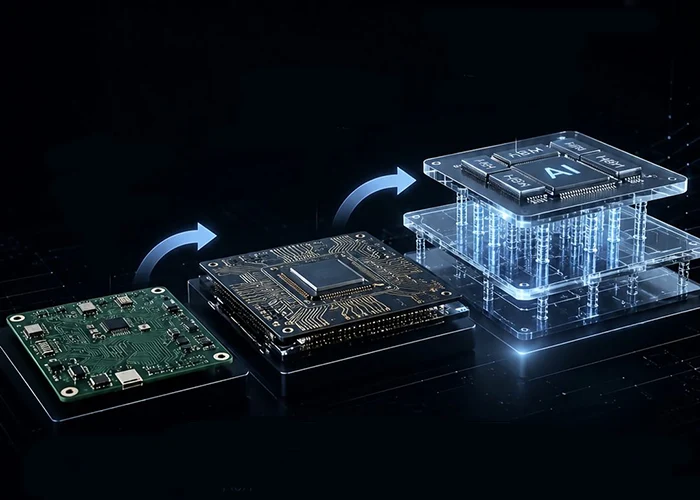
Traditional server PCBs typically have 8–16 layers, while AI servers jump directly to 18–38 layers.
The PCB usage per unit is 2–3 times that of traditional servers, and the value per unit is 3–7 times higher. NVIDIA’s Rubin architecture even employs 5-layer, 24-layer HDI boards, causing the PCB value per server rack to soar to 410,000 yuan.
More crucially, global AI server shipments are projected to surge from 500,000 units in 2020 to 2 million units in 2024, representing a compound annual growth rate (CAGR) exceeding 45%.
Leading manufacturers such as Shenghong Technology and Hudian Co., Ltd. have order backlogs extending into the second half of 2026, with some production lines operating at full capacity 24 hours a day yet still unable to meet demand.
2. Materials—From “Ordinary Fabrics” to “Aerospace Materials”
The materials used in AI server PCBs have undergone a generational leap:
| Material | Traditional Server | AI Server | Price Change |
|---|---|---|---|
| Copper Clad Laminate (CCL) | M6 Grade | M8+ / M9 Grade | Up 20%–30% |
| Copper Foil | Standard Copper Foil | HVLP (Hyper Very Low Profile) Copper Foil | Supply Shortage, Prices Continue to Rise |
| Fiberglass Cloth | Standard Electronic Glass Cloth | Low-Dielectric Quartz Cloth (Q Cloth) | 5× More Expensive Than Standard Glass Cloth |
| Resin | Standard Epoxy Resin | PTFE / Fluorinated Resin | Prices of High-End Grades Continue to Increase |
These materials represent not merely incremental upgrades, but a qualitative leap in physical properties.
For example, M9-grade copper-clad laminates feature a lower dielectric constant and lower signal loss, yet there are only a handful of manufacturers worldwide capable of providing a stable supply.
3. Production Capacity: High-End Capacity “Crowding Out” Mid-to-Low-End Supply
PCB manufacturers are shifting resources toward high-margin AI products, leading to a squeeze on mid-to-low-end production capacity.
High-end products consume significantly more resources in terms of technology, yield rates, and production capacity than low-end products.
Consequently, the risk of overcapacity is minimal in the short term, and this shift is actually driving structural price increases.
Why Is the High Price Justified?
Challenge 1: The “Layering Nightmare” Caused by a Sudden Surge in Layer Count
Traditional server PCBs have 8–16 layers, while AI servers go straight to 20–38 layers.
With each additional layer, the manufacturing complexity and yield risk do not increase linearly, but rather rise exponentially.
Lamination Precision: A 38-layer board requires 38 precise alignment steps, with cumulative error strictly controlled to the micrometer level;
Even the slightest deviation renders the entire board scrap.
Thermal Stress Control: As the number of layers increases, the differences in thermal expansion coefficients grow larger, making delamination and bubbling more likely during high-temperature reflow.
Drilling Difficulty: The thickness-to-diameter ratio (board thickness/hole diameter) increases dramatically;
With holes being both fine and long, ensuring uniform copper plating becomes extremely challenging.
Challenge 2: The “Micro-Via Trap” in HDI (High-Density Interconnect)
AI servers extensively utilize advanced HDI technologies (5–8 layers), with the core challenges lying in micro-via stacking and plating via filling.
As via diameters continue to shrink (from 0.15 mm to below 0.075 mm), via density has increased significantly
With the adoption of the MSAP (semi-additive process) method, the precision plating of via holes has become a “bottleneck” in the manufacturing process.
Increased layer thickness leads to uneven copper plating within the vias, directly affecting signal integrity.
There are only a handful of manufacturers worldwide capable of stably mass-producing 5-layer or higher HDI boards, which is where the technical barrier lies.
Challenge 3: High-Speed Signal Integrity — The “Physical Limit” of 224 Gbps
AI servers must support PCIe 5.0/6.0 or even higher protocols, with single-channel speeds approaching 224 Gbps. At this speed:
Signal Attenuation: Signals on standard PCB materials attenuate almost completely after traveling a short distance, necessitating the use of M8/M9-grade low-loss materials
Impedance Control: Line width and spacing must be within ±5% precision, which traditional etching processes struggle to achieve
Crosstalk Suppression: With extremely high line density, electromagnetic interference between adjacent signal lines must be precisely shielded
Surface Treatment: The surface roughness of HVLP (Ultra-Low Profile) copper foil must be controlled below 0.5μm;
Otherwise, high-frequency signals will “stumble” on the foil surface
Challenge 4: The “Double Whammy” of Thermal Management and Reliability
With AI server power density soaring to over 140 kW, PCBs face unprecedented thermal challenges:
Thick Copper Design: Power planes must handle high currents, requiring copper thickness to increase from 1 oz to 3–6 oz, making etching precision even harder to control
High-thermal-conductivity materials: Embedding thermal fillers or using metal substrates is required, which is completely incompatible with traditional FR-4 processes.
Long-term reliability: In high-temperature, high-humidity environments, the interlayer bonding strength and pad adhesion of 38-layer boards face severe tests.
Challenge 5: The “Oligopoly” of the Materials Supply Chain
High-end materials aren’t something you can just buy with money!!
M9-grade CCL: Globally controlled by a handful of manufacturers such as Taikong, Taiyao, and Shengyi Technology, with certification cycles lasting 6–12 months
HVLP copper foil: Supply-demand gaps of 24%, 40%, and 36% are projected for 2026–2028, making price increases highly likely
Specialty Glass Fiber Cloth: Low-dielectric and low-expansion grades remain in persistent short supply, with cumulative price increases expected to reach 25% by 2026
These “bottlenecks” in the materials supply chain directly drive up the cost of the entire PCB.
Summary: The Industry Logic Behind the Price Hike
The fundamental reason why prices for high-speed boards in AI servers have doubled is that they are no longer “circuit boards” in the traditional sense, but rather a composite of precision optical components for high-speed signal transmission and high-power thermal management components.
| Category | Traditional PCB | High-Speed PCB for AI Servers |
|---|---|---|
| Layer Count | 8–16 Layers | 18–38 Layers |
| Material Grade | M4–M6 | M8–M9 |
| Core Technology | Standard Multilayer PCB | Advanced HDI + Hybrid Lamination |
| Data Transmission Rate | 10–25 Gbps | 112–224 Gbps |
| Value per Board | Approximately RMB 1,000 | RMB 3,000–7,000 (High-End Models Exceed RMB 40,000) |
| Manufacturing Yield | 90%+ | 70–85% (Lower for High-End Products) |
This isn’t inflation; it’s a revaluation of value driven by technological advancements.
When PCBs evolved from mere “connectors” to “signal highways,” their pricing logic changed.
Against the backdrop of the AI computing power arms race, there are no signs of relief in the short term regarding the shortage and price hikes of high-end PCBs.