In modern FPC manufacturing, quality is not created at a single point—it is built step by step across the entire production chain.
Every process, from material preparation to final testing, plays a critical role in determining the final product outcome.
However, in real production environments, small decisions made at individual workstations often determine whether a product meets standards or fails in the hands of the customer.
What appears to be a minor deviation—a burr, a scratch, a slight misalignment—can propagate through multiple processes, amplifying its impact and ultimately resulting in significant quality issues, cost losses, and customer complaints.
The key question is not whether problems occur, but whether they are identified, controlled, and stopped at the right stage.
This raises a fundamental issue in manufacturing management: What does it truly mean to be responsible for each process?
I. Imagine a scenario
In the electroplating workshop, an operator is hanging FPCs from the previous drilling process onto the electroplating line. He notices there are burrs around the holes on several boards, very obvious.
According to internal standards, these boards cannot be accepted and should be returned to the drilling department for rework.
However, the operator hesitates: returning them back might annoy the drilling department, and returning require filling out forms and waiting, that will wast time and affect production today.
The operator thinks the burrs are minor and could be covered during electroplating, so he continues and hanging FPC boards, including those with burrs.
Several hours later, electroplating is completed. The operator pick up several samples for cross-sections, examining them under a microscope — the copper layer on the hole walls is uneven, and voids appear where there were burrs.
It means that some FPC in this batch may have no copper on the hole walls or insufficient copper strength.
The quality department conducts inspections and discovers the issue. The entire batch of FPC is isolated, retested, and reworked. The department director asks the operator, “Did you notice the burrs on these FPC when they arrived?
Why didn’t you report it to the responsible personnel and return them for rework?”
The operator replied, “I thought electroplating would cover the burrs up…”
The department director asked the drilling workshop operator the same question, and the response was, “I didn’t know there were burrs.”
Why did this issue occur? Both operators in both processes were responsible: the drilling process failed to control quality properly, and the electroplating process failed to reject defective products.
An issue that could had been avoided but hadn’t been stopped, losses passed on to the next process, resulting in time wasting and material&worklabor lost.
II. What does “being responsible for each process” mean?
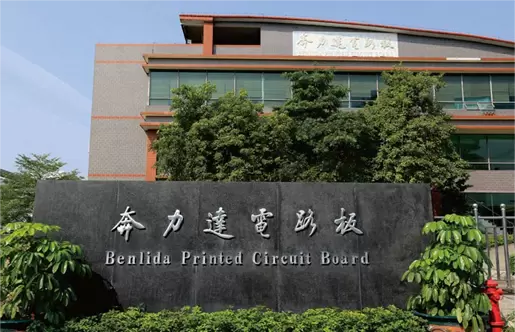
On Benlida’s production line, no process is an isolated island.
Material preparation → Inner layer circuit etching→ Lamination → Pressing → Drilling → Hole metallization → Outer layer circuit etching → Solder resist → Surface treatment → Molding → Testing.

This is a chain. Each process serves the next process—each process is handed over to the next process for further processing.
Being responsible for each process step involves, not only focusing on your own job duties but also connecting the preceding and following steps:
Did the drilling process provide a “qualified product” for the electroplating process? Are the holes drafting? Are there burrs?
Did the electroplating process provide a “qualified product” for the etching process? Is the copper layer on the hole walls sufficient? Is the surface clean?
Did the covering process provide a “qualified product” for the lamination process? Is the cover film applied correctly? Are there any air bubbles?
Focus on your own job responsibilities while monitoring the quality of the previous process.
Ensure only qualified products pass to the next process and control quality strictly at each step.
Address quality problems within the process and prevent them from passing to the next stage. Reduce quality risks and avoid cost waste.
III. What are Potential Quality Problems in FPC Production Processes?
Let’s look at the potential problems in the complete FPC production process:
Material Cutting
The incoming material has a shallow scratch. The cutting operator sees it but ignores it and continues cutting.
Circuit
During exposure, the circuit edges were slightly jagged due to the uneven board surface. The circuit engineer thought it was “not noticeable” and continued.
Covering
When the cover film was applied, a small air bubble appeared due to tiny bumps on the board surface. The laminator pressed it down with a roller, reducing the bubble’s size but not eliminating it completely. Thinking it would be flattened during lamination, he continued.
Lamination
Under high temperature and pressure, the small air bubble didn’t disappear; instead, it was pressed into a layer. After completing the first piece, the lamination engineer found the peel strength to be just below the lower limit of the specification and thought it “should be fine,” continuing lamination.
Drilling
The drill bit was slightly worn, resulting in a hole diameter that was 0.01mm too large. The drilling engineer thought it “should be fine” and continued drilling.
Electroplating
Due to the larger hole diameter, the copper plating thickness on the hole walls was uneven. The electroplating engineer didn’t notice and continued.
Surface Treatment
During immersion gold plating, the plating solution seeped into the gaps between the layers, leaving residue that couldn’t be cleaned. No one noticed.
Testing
During electrical testing, the test probes were inserted into the pads, and the signal was continuous.
This was because the delamination hadn’t created an open circuit. The tester signed off and released the board.
After receiving the board, the customer started SMT production.
The high temperature of reflow soldering caused the residue in the delamination to vaporize and expand, pushing up the cover film and forming a bulge.
The solder printing machine couldn’t print solder paste properly and the components couldn’t be well mounted. What is the worst result? The entire batch is unacceptable and customer complaints.
A customer complaint arrived. Everyone asking: Who is responsible for this bubble?
The answer is: Every process is responsible. Because no one in their own step blocked the problem.
IV. If every process is responsible for its upstream and downstream processes
The same FPC, but with a different work attitude:
Material Cutting
Upon seeing scratches, immediately report, isolate, and return to the supplier. Replace with a better batch of materials.
Circuit
Upon discovering uneven board surface, immediately report to the plating department. After inspection, if the plating fixture is found to be faulty, adjust it immediately.
Covering
Upon discovering small air bubbles while applying the cover film, remove and reapply, leaving no air bubble unchecked.
Lamination
If the peel strength of the first piece is low, immediately adjust the parameters and re-verify its quality before proceeding with mass production.
Drilling
If the hole diameter is found to be too large, immediately stop the machine and replace the drill bit. Continue only after confirming it is acceptable.
Electroplating
Upon receiving the board, first inspect the hole diameter and burrs. If any abnormalities are found, immediately return it for drilling. Defective products are not accepted.
Surface Treatment
Inspect the board surface before immersion gold plating. Only proceed to the plating bath if there are no abnormalities.
Testing
Each piece is rigorously tested, leaving no suspicious signal unchecked.
The result? Excellent quality. All FPCs received by the customer were qualified. No customer complaints, no claims, and no overtime rework.
What’s the difference? The difference lies in: each process is responsible for controlling the upstream and downstream processes, rather than only focusing on its own process without considering the overall picture.
| Process | Potential Problem (Poor Control) | Responsible Action (Correct Control) | Impact |
|---|---|---|---|
| Material Cutting | Shallow scratches ignored | Report, isolate, and return material | Prevents defect source entering production |
| Circuit | Jagged edges ignored due to uneven surface | Report issue and inspect upstream plating fixture | Ensures circuit integrity |
| Covering | Air bubbles partially pressed, not removed | Remove and reapply cover film completely | Avoids internal defects and delamination |
| Lamination | Low peel strength accepted as “fine” | Adjust parameters and re-verify before production | Ensures bonding reliability |
| Drilling | Worn drill bit causes oversized holes | Stop machine and replace drill bit immediately | Maintains dimensional accuracy |
| Electroplating | Uneven copper thickness unnoticed | Inspect hole quality; reject defective boards | Ensures plating quality and reliability |
| Surface Treatment | Chemical residue unnoticed in layers | Inspect surface before plating process | Prevents contamination and failures |
| Testing | False pass due to no open circuit detected | Perform strict testing and verify abnormal signals | Prevents defective products from release |
Potential Quality Problems vs. Correct Actions in FPC Processess
V. “No Acceptance, No Manufacturing, No Outflow”—The Three No’s Principle
In quality management, there is a famous “Three No’s Principle.” This refers to the concept of quality management:
First, do not accept defective products.
If a board from the previous process has a problem, refuse to accept it and return it for rework. This protects this process, ensures responsibility for other processes and the overall product, and protects the entire factory.
Accepting defective products helps the previous process cover up the problem.
The problem won’t disappear; it will only transfer to this process and subsequent processes, causing greater cost losses.
Second, do not manufacture defective products.
This process must be performed according to standards. Parameters must be accurate, operations must be correct, and self-inspections must be frequent.
Don’t leave problems to the next process because of “time constraints” or “avoiding trouble.”
Manufacturing defective products will result in rework in the next process, potentially causing batch defects or even scrap, leading to greater cost waste.
Third, do not allow defective products to leave the factory.
If a quality problem is found in a product produced in this process, do not allow it to proceed to the next process.
Stop, rework, or scrap. Don’t think, “The next process might not see it,” “Testing might not detect it,” or “It doesn’t matter.”
Defective products that leave the factory will return—responsibility for rework and even scrapping.
The “Three No’s” principle is the specific guideline for internal quality management.
VI. How much difference can a simple change make?
The lamination process was once complained about by the next process: misalignment of the cover film.
The lamination process was indignant: “The employees are already very careful. The equipment’s precision is limited; the misalignment is within acceptable tolerances.”
Later, the factory manager arranged for the lamination process employees to visit the next process—the pressing workshop—to learn and understand the process.
They observed that misaligned boards were difficult to align in the pressing process, requiring pressing employees to spend several times the time adjusting, and often resulting in air bubbles.
After observing this, the lamination process employees proactively improved their alignment methods and increased the frequency of self-inspection.
The misalignment rate dropped from 1% to below 0.5%.
Why was this improvement possible? Because they recognized that defects in their process increased the cost and burden on the next process.
Driven by a sense of responsibility, they proactively strengthened the quality control requirements of their process.
This is the power of responsibility. It wasn’t driven by fines or performance evaluations, but by a strong sense of responsibility—being accountable for every step of the process and for the product.
VII. The Next Process Awaits You
On Benlida’s production line, every step anticipates the steps before it.
Production is a closed loop; everyone is a member and a responsible party. Every board, every process, every operation is everyone’s responsibility and will become the work for the next colleague.
Therefore, when you discover a “small problem” in your position, think about: Will it affect product quality? Will it cause problems for the next process?
The answer from a sense of responsibility is simple.
Conclusion
The difference between stable quality and recurring defects rarely lies in equipment or technology alone—it lies in execution discipline and process responsibility.
When each operator strictly follows the principle of “No Acceptance, No Manufacturing, No Outflow,” problems are contained at their source.
Defects are not transferred, risks are not accumulated, and quality becomes predictable and controllable.
Conversely, when even one process lowers its standards or makes assumptions, the entire production chain becomes vulnerable.
Ultimately, responsibility in manufacturing is not limited to completing a task—it is about ensuring that every product handed to the next process is truly qualified. Every small decision either protects or undermines the system.