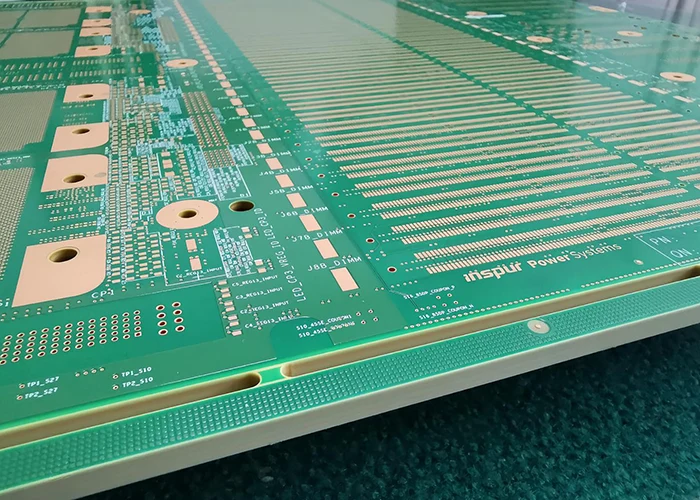
When designing a PCB for an electronic product, we must first determine how many layers the board has, including the number of signal layers, power layers, and ground layers, as well as the board’s thickness, and so on.
Standard PCB thicknesses include: 0.6 mm, 0.8 mm, 1.0 mm, 1.27 mm, 1.56 mm, 1.6 mm, 2.0 mm, 2.4 mm, 3.0 mm, and 4.0 mm. The thickest PCB we have produced to date is 6 mm.
The most common thickness is 1.6 mm. The figure below shows the layer stackup of a 4-layer 1.6 mm PCB:
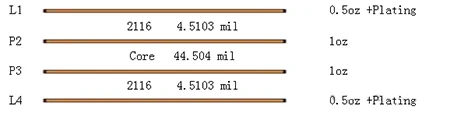
A typical 4-layer board has two signal layers, one power/ground layer, and one GND layer, as shown in the top-left diagram.
Since the outer layers are usually copper-clad, the base copper thickness is typically 1/3 oz or 0.5 oz.
Unless otherwise specified, 1 oz copper foil is used for the inner layers, while the PP and core materials are selected as needed. A 6-layer board is different, as shown in the diagram below:
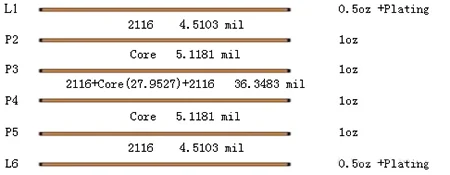
Due to manufacturing limitations, engineers often construct 6-layer boards as “pseudo-8-layer” structures in many cases.
They add an extra core layer to balance thickness and meet manufacturing requirements.
Generally, the layering design methods for high-layer boards are similar; the only differences lie in the specific arrangement of the layers or certain special requirements.
PP and Core (Core Board)
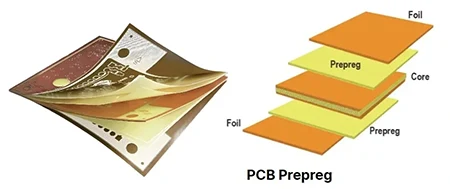
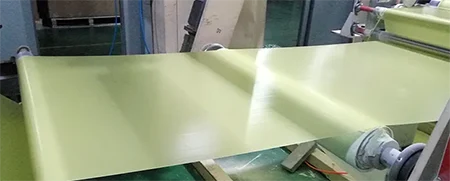
What Is PP (Prepreg) in PCB Manufacturing?
It is a thin sheet material consisting of glass fiber cloth impregnated with resin and cured to an intermediate stage (Stage B).
Within PCB manufacturing processes, PP functions mainly as an adhesive and insulator.
Manufacturers use it as the bonding material for conductive patterns on the inner layers of multilayer printed circuit boards and as an interlayer insulating medium.
It firmly bonds the core board to the copper foil or to other core boards, while ensuring electrical insulation between layers, enabling the circuit board to operate stably and reliably.
106: Thickness approx. 50 μm, resin content ~70%.
1080: Thickness 60–70 μm, resin content ~60%.
2116: Thickness 90–110 μm, resin content ~50%.
7628: Thickness 170–190 μm, resin content ~45%.
Select the appropriate PP thickness based on the total PCB thickness and interlayer spacing requirements.
Thicker PP provides better mechanical support but may increase signal propagation delay; thinner PP reduces signal propagation delay but may require more layers to ensure mechanical strength.
What Is a Core Board?
The core, also known as the core board, is a rigid, copper-clad laminate of a certain thickness that serves as the base material for printed circuit boards and plays a critical role in PCBs.
High-layer-count PCBs are formed by laminating the core with prepreg.
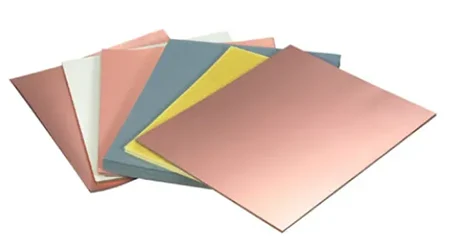
The process of manufacturing the core board begins by immersing fiberglass cloth in liquid resin, ensuring that the resin fully penetrates the fabric.
Technicians then treat the resin to increase its viscosity until it reaches a semi-solid state that remains flexible.
Next, they stack multiple pre-preg (PP) layers and apply high temperature and pressure to laminate and cure the resin, fully forming the core board.
Finally, they cool and machine the core board before cutting it to standard PCB dimensions.
Difference Between PP and Core Board
In simple terms, the difference between PP (PrePreg) and core board is that core board contains copper foil, while PP does not.
However, in certain specific cases, core boards may also lack copper foil, such as the copper-free core boards used in the “fake 8-layer” boards mentioned earlier.
In PCB manufacturing, PP and core boards represent distinct material forms.
Engineers and manufacturers differentiate them significantly in terms of composition, performance, manufacturing processes, and applications.
PP:
Manufacturers typically produce this prepreg by impregnating glass fiber cloth with resin and then applying a pre-curing process.
Its main components are glass fiber and resin—usually epoxy resin—with possible additions of curing agents, accelerators, and other auxiliary components.
Core Board:
Manufacturers generally use glass fiber cloth as the reinforcing material and epoxy resin or similar materials as the matrix.
They laminate these components together through specific processes and then apply copper cladding on both sides.
Some specialized core boards may use other materials, such as ceramics, as the matrix.
PP:
In a semi-cured state, this material shows a certain degree of tackiness and flowability, and manufacturers can further cure it under high temperature and pressure.
Its dielectric and mechanical properties have not yet fully stabilized, and they continue to change during the subsequent curing process and bonding with other materials.
Core Board:
This type of board undergoes full curing, resulting in stable mechanical and electrical properties.
It maintains a fixed dielectric constant, insulation resistance, and hardness, while providing stable physical support and electrical insulation for the PCB.
Types of PCB Materials
There is a wide variety of PCB materials, which can be classified into organic, inorganic, composite, and other types.
Organic Materials
Phenolic Resin Boards: Made from phenolic resin and reinforcing materials such as paper or glass fiber.
They offer good mechanical strength and processability at a relatively low cost, but their electrical properties and heat resistance are relatively poor.
Manufacturers generally apply these materials in low-frequency circuits and consumer electronics where performance requirements remain relatively low.
Epoxy Resin Boards:
These use epoxy resin as the matrix and glass fiber cloth as the reinforcing material.
A common type is FR-4 (flame-retardant glass-fiber epoxy board), which offers good electrical properties, mechanical strength, and flame retardancy at a moderate cost.
Manufacturers currently use this as the most widely adopted PCB material, and engineers apply it to various electronic devices, including computer motherboards and mobile phone circuit boards.
PTFE (Polytetrafluoroethylene) Board:
Features an extremely low dielectric constant and loss factor, excellent high-frequency performance, and corrosion resistance, maintaining good performance even in high-temperature environments.
Manufacturers face relatively high costs and processing difficulties with these materials.
As a result, engineers primarily select them for high-frequency, high-speed, and high-performance electronic equipment, including radar systems, satellite communications, and microwave circuits.
Polyimide boards:
These offer high heat resistance, high mechanical strength, good insulation properties, and chemical stability, along with excellent flexibility.
Engineers commonly apply these materials in fields with extremely high reliability and performance requirements, including aerospace, military, and high-end electronic equipment.
They also use them in the manufacture of flexible PCBs.
Inorganic Materials
Ceramic Substrates:
Manufacturers primarily build these substrates using ceramic materials such as aluminum oxide and aluminum nitride.
They feature high hardness, high thermal conductivity, low dielectric constant, and excellent chemical stability, and are capable of withstanding high temperatures and high power levels.
However, ceramic substrates are relatively brittle, difficult to process, and relatively expensive.
Engineers often select these substrates for electronic devices that operate at high frequencies, high voltages, or high power levels.
They also use them in applications that require efficient heat dissipation, including power amplifiers, automotive electronics, and aerospace electronics.
Metal Substrates:
These substrates use metals (such as aluminum or copper) as the base layer, with insulating and conductive layers applied to the surface.
They offer excellent heat dissipation performance and mechanical strength, effectively addressing heat dissipation challenges in high-power electronic devices.
Manufacturers commonly use these substrates in lighting, automotive electronics, and power electronics applications, including LED light boards and automotive power amplifier circuit boards.
Composite Materials
Composite Substrates:
Engineers combine materials with different properties to meet specific performance requirements.
For example, combining polytetrafluoroethylene (PTFE) with glass fiber or other resins can strike a balance between high-frequency performance, mechanical properties, and cost.
Manufacturers commonly use this type of material in communication equipment that requires a certain level of high-frequency performance while maintaining cost control.
Core-Shell Structured Materials:
These materials typically consist of an organic substrate, while manufacturers apply a special inorganic coating or film with specific properties to its surface through specialized processes.
For instance, applying a ceramic coating to the surface of an epoxy resin board enhances its heat resistance and corrosion resistance.
By combining the advantages of organic and inorganic materials, these materials are suitable for electronic devices that require high environmental adaptability.
Other Special Materials
Liquid Crystal Polymers (LCP):
These materials feature extremely low dielectric constants and loss tangents, maintaining excellent signal transmission performance at high frequencies while also offering good heat resistance and chemical stability.
Manufacturers primarily incorporate these materials into high-end wireless communication equipment and automotive millimeter-wave radar systems.
Their excellent electrical properties help support the requirements of high-speed, high-frequency signal transmission.
Nanomaterial-Reinforced Substrates:
Adding nanomaterials (such as nanoceramic particles and nanocarbon tubes) to traditional PCB materials can significantly enhance the material’s mechanical, thermal, and electrical properties.
At present, manufacturers use these materials in relatively limited applications.
As nanotechnology continues to advance, engineers and PCB designers will adopt these materials more widely in future high-performance PCB designs.
Conclusion
PCB design and manufacturing rely heavily on a deep understanding of layer stackup structure and material selection.
From basic 4-layer boards to complex high-layer configurations, engineers must carefully balance signal integrity, power distribution, mechanical strength, and manufacturing constraints.
The choice and arrangement of PP (prepreg) and core materials play a critical role in achieving stable electrical insulation, reliable bonding, and controlled dielectric performance across layers.
At the same time, PCB performance is strongly influenced by material systems, ranging from common FR-4 epoxy boards to advanced PTFE, ceramic, polyimide, and emerging nanomaterial-enhanced substrates.
Each material category offers distinct advantages in thermal behavior, electrical characteristics, cost efficiency, and application scope.
As electronic products continue to evolve toward higher speed, higher frequency, and greater integration, PCB technology is also advancing in parallel.
Future designs will increasingly depend on optimized stackup engineering and advanced materials to meet demanding requirements in communication, automotive electronics, aerospace, and high-performance computing systems.