In modern FPC (Flexible Printed Circuit) manufacturing, quality has become the most critical factor determining competitiveness, customer trust, and long-term profitability.
Even a seemingly low defect rate can lead to significant downstream risks once products are integrated into complex systems, where failures become costly and difficult to trace.
This raises an important question for manufacturers: should production aim for an acceptable defect rate, or pursue a true zero defects mindset?
This discussion explores the meaning, challenges, and practical value of zero defects in FPC production, and examines how it can be applied as both a quality philosophy and an operational standard.
I. A Question
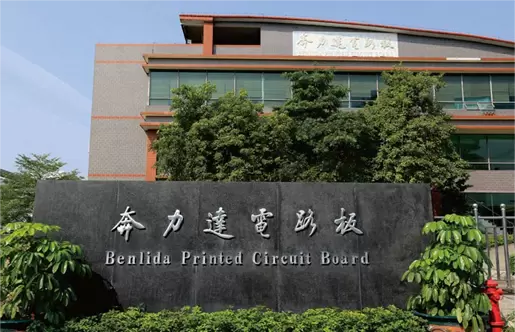
At Benlida’s production meeting, the factory manager asked a question: “Can Benlida’s FPC achieve zero defects? Can a batch of goods be produced without any defects and deliver to the customers?”
The process director: “FPC production involves over a dozen processes, which are complex, and each process has variables, making it very difficult to achieve zero defects.”
The production manager: “If we strictly control processes and quality to pursue zero defects, our production costs will increase significantly, while production efficiency will decrease, thus affecting profits.”
The quality manager: “Customers require a defect rate of 0.1%, which theoretically accepts defects.”
The factory manager picked up the customer complaint record and said: “Last month, a batch of FPCs had a few ones with air bubbles in the cover film, leading to a customer complaint.
The actual defect rate for that batch was only 0.1%, but the customer said: ‘Your defect rate is 0.1%, but if it causes performance failures in the end product, it’s 100%, and all the costs of the end product will be at risk due to the defect.'”
A 0.1% defect rate is already pretty good within Benlida, but from the customer’s perspective, 0.1% equals “unreliable product, increasing other costs and risks.”
So, is zero defects an achievable goal or an unrealistic ideal?
II. Zero Defects is Not “Never Making Mistakes”
The management mindset of “zero defects” is not “not allowing any defects.” By that standard, no factory in the world could achieve it.
Quality management master Crosby defined zero defects as: the commitment and attitude of “doing things right at the first time.” It doesn’t require you never make mistakes, but rather that you don’t accept, generate, or allow defects to leak out.
Zero defects is not a numerical “zero,” but a code of conduct:
- – When drilling, you know the drill bit is worn, but to meet production targets, you choose to continue drilling—this is not a zero-defect attitude.
- – When applying a cover film, you find the alignment is slightly off, but you think “it should be fine”—this is not a zero-defect attitude.
- – During electrical testing, you find the test probe has poor contact, but you think “most of it is good”—this is not a zero-defect attitude.
Zero defects is not “never making mistakes in the result,” but “never letting go of any shortcomings in action.”
III. Why Must the FPC Industry Focus on Zero Defects?
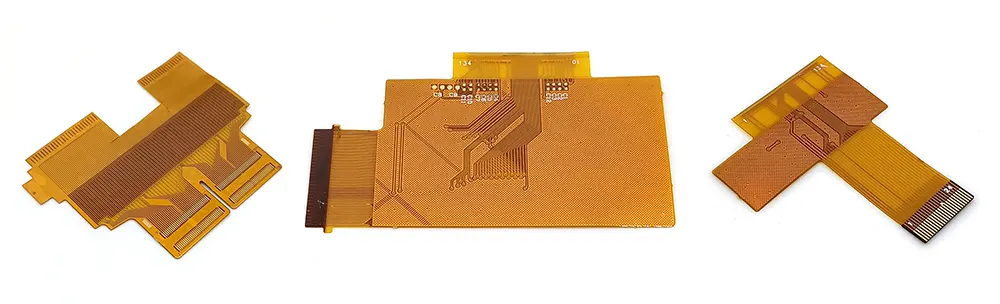
FPCs have a unique characteristic: they are installed inside equipment to ensure electrical conductivity.
A problem with an FPC can affect surrounding parts, causing damage, extremely high repair costs, and even personal injury.
– If the FPC in an appliance has poor contact, repair personnel must disassemble the entire device to troubleshoot, locate the faulty FPC, and replace it.
Labor costs, logistics costs, and the customer’s time cost can add up to thousands or even tens of thousands of times the price of the FPC itself.
– If the FPC in a car camera breaks, it may require removing the bumper, rearview mirror, and recalibrating the camera system, with repair labor costs reaching hundreds of yuan per hour.
– If the FPC in a shopping mall display screen has quality defects, resulting in a mottled image, it affects the merchant’s image and advertising revenue.
Repair personnel must troubleshoot the problem, and suspending advertising also incurs costs.
FPC defects cannot be solved by simply “replacing a piece”; the cost of failure far exceeds its manufacturing cost.
Therefore, customers’ high demands for FPC quality are reasonable.
The requirement of Cpk ≥ 1.33, passing reliability tests, and achieving zero-defect shipment quality is not merely for the sake of strictness, but because FPC defects can affect the entire product and other peripheral components.
In the FPC industry, a 0.1% defect rate is not “not bad,” but rather “still optimizable.”
IV. A Real Case of Zero Defects
There is a FPC factory with only 150 employees, primarily producing FPCs for a medical device company.
The requirements for medical devices are higher than for industrial automation and consumer electronics: zero defects are a basic threshold because the stability of medical devices is crucial.
How does this factory manage production and quality control?
Every process has error-proofing devices:
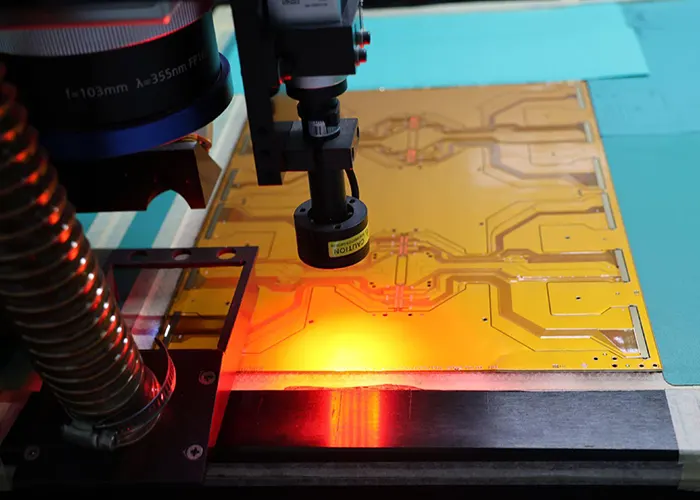
– The drilling machine is equipped with a detector for broken needle: if a needle breaks, the machine immediately stops and an alarm sending out to supervisor, preventing the production of even one more defective FPC.
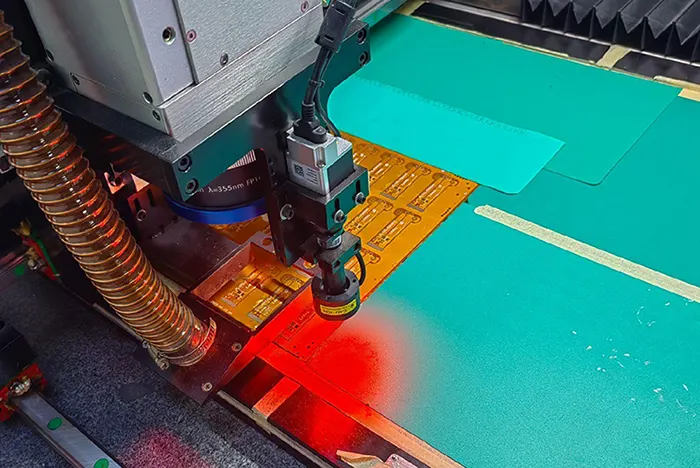
– The cover film lamination uses a CCD alignment system: if the deviation exceeds 0.1mm, an alarm sounds, and require the technican to realign.
– Every batch of products undergoes first-article confirmation and self-inspection, sampling, and mutual inspection every hour — not just one piece, but five pieces.
All data must be recorded and only those that pass inspection, then can proceed to production. If parameters show a drifting trend, adjustments are proactively made before exceeding tolerances.
– Full inspection before shipment — every piece undergoes electrical testing, AOI (Automated Optical Inspection), and visual inspection.
| Process Stage | Control Measure | Trigger / Condition | Action Taken | Purpose |
|---|---|---|---|---|
| Drilling | Broken needle detection system | Needle breakage | Machine stops automatically and alarm notifies supervisor | Prevent further production of defective FPCs |
| Lamination | CCD alignment system | Deviation exceeds 0.1 mm | Alarm triggers and technician realigns | Ensure precise alignment and prevent defects |
| In-Process Inspection | First-article + self, sampling, and mutual inspection (hourly, 5 pieces) | Routine production checks | Multiple inspection methods applied continuously | Detect defects early and maintain process stability |
| Data Monitoring | Process data recording and trend tracking | Parameter drift detected | Adjust process before exceeding tolerance | Prevent defects through proactive control |
| Final Inspection | 100% inspection (electrical test, AOI, visual) | Before shipment | Every piece is fully inspected | Ensure zero-defect output to customer |
The result? Their defect rate has been zero for three years: No complaints, no returns, no claims.
Customer orders are increasing, and prices are 30% higher than the average on market.
Zero defects have been achieved in this factory.
V. How far is Benlida from zero defects?
Some might say: their factory has advanced equipment and management concepts, and highly skilled employees; it’s stressful for us.
But we must ask: how do we achieve it? Since there are standards, what difficulties do we face, will we encounter, how do we solve them, and how do we optimize?
What is our current defect rate? 0.1%. This means that out of every thousand FPCs, 1 is scrapped.
0.1% may seem small, even excellent on some rivals eyes, but consider this calculation:
If 1 million pieces are produced monthly, 1000 pieces will be scrapped. 1000 pieces × average cost of 20RMB = 20,000RMB.
If we reduce the defect rate to 0.05% through management and training, process optimization and improvement, and strict requirements, could we reduce it to 0.02%?
Zero defects is a continuous process of optimization and improvement, an infinitely close approach.
We must strive in this direction and set requirements for ourselves:
- – Reduce the hole deviation rate in drilling to 0.1%.
- – Reduce the missed detection rate of bubbles in the cover film to 0.1%.
- – Reduce the false judgment rate in electrical testing to 0.1%.
Each step brings us closer to zero defects.
VI. Zero defects are not a cost, but a profit.
Will pursuing zero defects lead to uncontrolled costs? Let’s do the math.
Suppose that to reduce the defect rate, an additional inspection process is added, costing an extra person’s salary of 5000RMB per month.
Meanwhile, due to strengthened process control, the number of scrapped pieces decreased by 1,000 per month.
With a cost of 20RMB per piece, this translates to monthly savings of 20,000RMB.
An investment of 5,000RMB yields 20,000RMB, resulting in a net profit of 15,000RMB.
Is this called cost overrun? This is called return on investment.
Furthermore, zero defects bring internal confidence in production and quality control information, while externally it translates to customer trust, increased orders, and brand premium—greater benefits.
As Crosby famously said, “Quality is free. It’s not a gift, it’s something free. What really costs money is ‘non-conformity’—rework, scrap, customer complaints, and claims.”
In other words, zero defects don’t increase costs, they reduce costs. Every customer complaint avoided means retaining a customer.
VII. So, is zero defects a goal or an ideal?
Is zero defects an ideal? Yes. Because absolute “zero” defects in production are virtually impossible in reality.
It is a pragmatic goal. Because:
1. Customers won’t forgive your defective products just because you “can’t achieve zero defects.” — They’ll just switch suppliers.
2. Competitors won’t stop just because you think it’s impossible. — They’ll get better and better, replace you.
3. Every defective product represents real economic loss and reputational damage.
We shouldn’t dwell on whether “zero defects” is actually achievable.
What we need is for everyone, every process, and every board to adhere to the “zero defects” standard:
- – When drilling, if this piece is defective, the entire batch has to be redone—wouldn’t you be more meticulous?
- – When laminating, if this piece bubbles, the customer will claim 10,000RMB—wouldn’t you check it twice more?
- – When inspecting, if this piece leaks, your name will be on the customer complaint report—wouldn’t you be more careful?
| Process Stage | Scenario | Risk / Consequence | Expected Behavior |
|---|---|---|---|
| Drilling | One defective piece in the batch | Entire batch may need to be redone | Be more meticulous and ensure accuracy during drilling |
| Laminating | Bubble defect in the product | Customer may claim 10,000 RMB | Double-check alignment and process conditions |
| Inspection | Defective piece escapes detection | Direct link to customer complaint and personal accountability | Be more careful and thorough during inspection |
Treat “zero defects” as a daily work standard, not just a slogan. When everyone thinks this way, zero defects will no longer be a distant ideal, but a goal we Benlida get closer to every day.