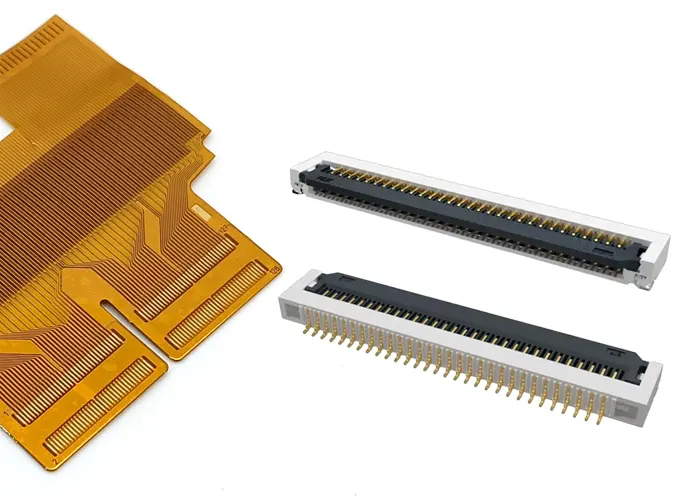
Flexible circuits have revolutionized the modern electronics industry, offering unparalleled adaptability through their compact, lightweight designs.
Although they share many similarities with rigid PCBs, flexible circuits present unique challenges—as well as opportunities for innovation—when it comes to connection termination.
From traditional connectors to custom solutions developed specifically for flexible circuits, a deep understanding of the characteristics of different termination methods is key to ensuring product durability and performance.
This guide will delve into termination technologies suitable for flexible circuits, focusing on zero-insertion-force (ZIF) connectors, unsupported flexible finger structures, and crimp/displacement connectors.
Each method has its unique advantages, and the correct choice must be made based on specific application requirements.
Diversity in Flexible Circuit Connectivity
Flexible circuits are compatible with a variety of connector types, including standard through-hole/surface-mount connectors, circular/D-sub connectors, and pin-and-socket configurations.
These options allow designers to leverage established design expertise from rigid PCBs.
However, special attention is required: the connector area typically needs to be reinforced with a stiffener to prevent damage caused by stress.
Since connectors are heavier and stiffer than the flexible substrate itself, failure to reinforce this area may result in conductor breakage or delamination.
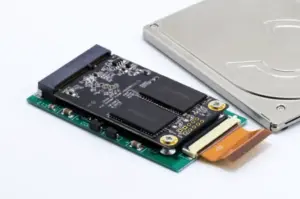
Providing structural stability and evenly distributing stress through a stiffener is a critical step in ensuring the long-term reliability of flexible circuits.
Zero Insertion Force (ZIF) Connectors
ZIF connectors are an ideal choice for applications requiring frequent disassembly and reassembly. This type of connector secures the flexible circuit via mechanical latches, enabling a stable and reliable connection without the need for excessive insertion or removal force, while also reducing wear on the copper conductors.
Advantages of ZIF Connectors
- Durability: Minimal mechanical stress on copper traces extends service life.
- Compact Design: No need for additional mating connectors, saving space and costs.
- Ease of Use: Suitable for applications requiring frequent reconnection.
Key Design Considerations for ZIF Connections
› Thickness Requirements
The mating area of a ZIF connector typically requires a thickness of 0.012“ ± 0.002”.
The flexible circuit may need to use a polyimide reinforcement board in the termination area to meet specifications.
To avoid stress concentration at the edges of the reinforcement, ensure at least 0.030″ of overlap with the cover layer material.
› Precision Control
The contour of the flexible circuit for ZIF connections requires extremely high precision, with tolerances as tight as ±0.0002″, potentially requiring advanced manufacturing processes such as laser cutting or high-precision molds.
› Surface Treatment
For applications involving frequent insertion and removal, durable plating materials should be selected. Thin plating may degrade over time, leading to exposure of the underlying metal.
For applications requiring reliability, compactness, and frequent connectivity, ZIF connectors are an ideal choice.
Unsupported Flexible Finger Structures
As a highly adaptable connection solution, unsupported flexible finger structures achieve connectivity through the exposed extensions of the conductors.
These “floating” conductors, which are not enclosed by a substrate or cover layer, can connect directly to other PCBs or components from both sides, offering flexible options for specialized layouts.
Advantages of Flexible Finger Structures
- Customization: Different pitch, length, and layouts can be designed according to requirements.
- Flexibility: Electrical connections can be established without the need for additional connectors.
- Dual-sided Access: The exposed conductor surfaces can be accessed from both the top and bottom sides.
Design Guidelines
› Thicker Conductors for Enhanced Durability
The finger regions are typically designed with thicker copper conductors (typical thickness 0.010 inches), while the rest of the flexible circuit uses thinner conductors to maintain flexibility.
› Laser Ablation Process
The suspended characteristic of the flexible finger is achieved through laser ablation, a process that precisely removes the substrate material from three sides of the conductor. While this customized design meets strict specifications, it increases overall costs.
› Damage-Resistant Design
Flexible fingers are susceptible to damage during handling and assembly, so designers often employ temporary busbar structures for protection.
These temporary connections align and support the finger structures until final assembly is complete.
Although unsupported flexible fingers are more complex and costly than other methods, they offer exceptional flexibility for customized applications.
Crimp Connectors
The connectors provide a reliable and cost-effective connection solution for flexible circuits.

By mechanically piercing the flexible circuit, the contacts wrap around the conductors to form a secure electrical and mechanical connection.
These connectors are available in standard male and female configurations and can be equipped with housings for enhanced protection.
Reasons to Choose Crimp Connectors
- Durability: Creates a secure connection that withstands mechanical stress.
- Cost Advantage: A practical choice for high-volume production or budget-sensitive designs.
- Wide Compatibility: Standard pitch and configurations make them suitable for a wide range of applications.
Design Considerations
- Housing Options: Centerline housings can encapsulate crimp contacts, providing additional support and protection.
- Customization Capabilities: While offering less customization than unsupported flexible contacts, they meet the needs of most standard applications (particularly regarding dimensions and pitch).
- Suitable Applications: Ideal for applications requiring reliable connections with low assembly complexity.
Crimp connectors provide a simple and direct solution for achieving safe and cost-effective termination.
Termination Area Support: The Critical Role of Reinforcement Plates
All termination methods must consider the use of reinforcement plates.
These structures provide mechanical support for the connector or termination area, ensuring that weight, motion, or assembly stresses do not compromise the performance of the flexible circuit.
Best Practices for Reinforcement Plate Design
- Select materials compatible with the circuit’s thermomechanical properties, such as polyimide or FR4.
- Ensure the stiffener overlaps with the cover layer material to disperse stress concentrations.
- Avoid allowing the stiffened area to compromise the natural flexibility of other parts of the circuit.
Regardless of the termination method used, the proper use of stiffeners can significantly enhance the durability and reliability of flexible circuits.
Conclusion
Flexible circuits offer innovative solutions for compact, lightweight designs, but selecting the appropriate termination method is key to achieving performance and reliability.
ZIF connectors are suitable for applications requiring high precision and frequent assembly and disassembly; unsupported flexible fingers provide unlimited possibilities for custom layouts; and crimp connectors are a cost-effective and reliable choice.
Through the proper application of stiffener technology, the overall durability of flexible circuits can be significantly improved.