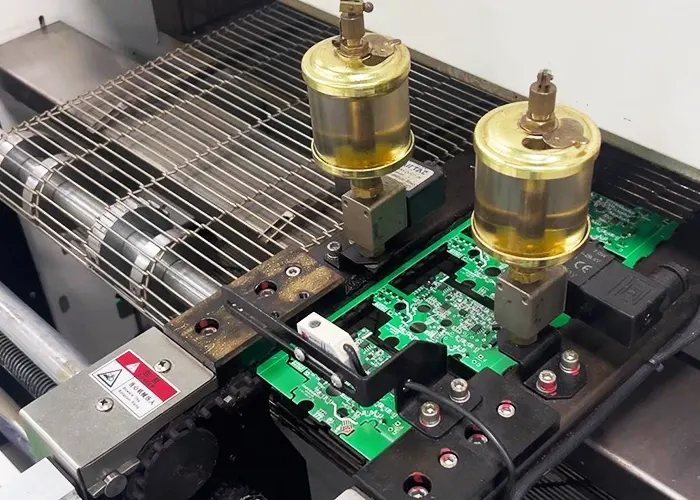
With the rapid advancement of electronic information technology, the lifecycle of electronic products is becoming increasingly shorter.
This trend places higher demands on electronic assembly processes, particularly in terms of precision, efficiency, and reliability.
Among these processes, reflow soldering plays a critical role in modern electronics manufacturing, as its quality directly impacts product performance, long-term reliability, and service life.
In practical production environments, multiple variables, such as materials, equipment, and process parameters, influence the reflow soldering process.
These factors can easily lead to various soldering defects, which significantly reduce product yield and negatively affect manufacturing costs and overall profitability.
Therefore, a thorough understanding of the causes of reflow soldering defects and the implementation of effective solutions are essential for improving product quality and enhancing competitiveness in the electronics assembly industry.
In recent years, researchers have conducted extensive studies on reflow soldering technologies.
Most studies have focused on areas such as solder materials, equipment performance, process optimisation, and defect detection and classification.
While researchers have established a relatively comprehensive theoretical framework for defect identification, they have conducted limited in-depth studies on the root causes and practical solutions for specific defects.
In real-world manufacturing scenarios, quickly identifying and resolving soldering defects under specific production conditions remains a key challenge and a major research focus.
This article first introduces the basic principles and process flow of reflow soldering, followed by a detailed analysis of common soldering defects encountered in production.
Finally, it proposes targeted solutions to build a systematic and practical framework for defect analysis, aiming to support quality control and process optimisation in the electronics assembly industry.
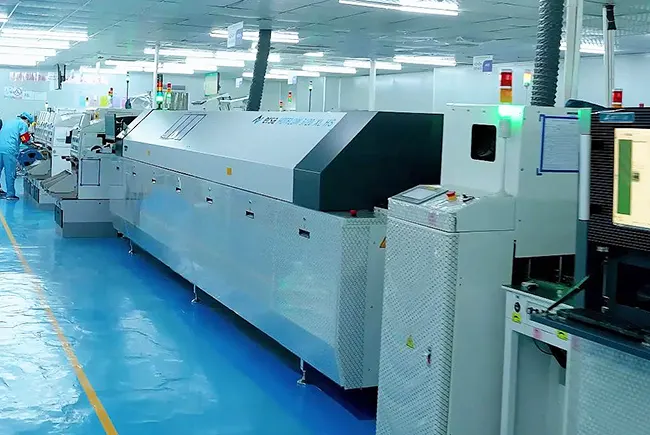
Overview of Reflow Soldering
Reflow soldering is essentially a precision soldering technology based on thermodynamic principles.
Basic Principles of Reflow Soldering
By precisely controlling various heat transfer mechanisms—including conduction, convection, and radiation—it guides the solder paste pre-printed on the pads of a printed circuit board (PCB) through the entire process of melting, flowing (i.e., reflow), wetting and spreading, and final solidification.
The core of this process lies in raising the temperature of the soldering area to and briefly maintaining it above the liquidus temperature of the solder paste alloy.
This promotes a metallurgical reaction between the molten solder and the component leads and PCB pads, forming a reliable interfacial intermetallic compound layer.
Consequently, the solder forms a secure mechanical connection and creates a low-resistance electrical path between the components and the circuit board.
Reflow Soldering Process Flow
The reflow soldering process flow primarily includes key stages such as loading, solder paste dispensing, component placement, preheating, reflow soldering, cooling, and post-process inspection.
Among these, the uniformity and thickness control of solder paste application, as well as the placement accuracy of components, play a decisive role in the subsequent soldering quality.
The primary function of the preheating stage is to activate the flux in the solder paste.
It allows solvents to gradually evaporate. This prevents defects such as bubbles, solder splatter, or solder balls caused by rapid temperature increases during the reflow stage.
Reflow soldering is the core of the entire process.
Parameters such as heating rate, peak temperature, time above liquidus (TAL), and cooling rate require precise control.
These parameters ensure sufficient wetting of the solder joints. They also enable the formation of a reliable metallurgical bond.
The cooling stage influences the microstructure and mechanical strength of the solder joints.
An appropriate cooling rate helps form a fine-grained microstructure, thereby improving the fatigue resistance of the solder joints.
Finally, solder joints are comprehensively inspected using methods such as Automated Optical Inspection (AOI) and X-ray inspection.
This is a critical safeguard for achieving process quality control and for promptly identifying and eliminating defects.
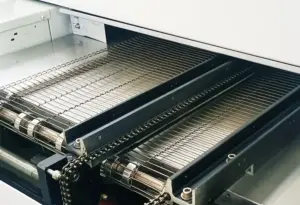
Common Defects and Their Causes
A cold solder joint occurs when the solder fails to fully melt or melts insufficiently, producing inadequate solder strength.
Cold Solder
The primary causes include insufficient preheating temperature, excessively low peak reflow temperature, inadequate hold time, and poor-quality solder paste.
Cold solder joint defects typically manifest as a rough surface, cracks, or incomplete connection at the solder joint.
Overheating
Overheating refers to the phenomenon where the solder joint reaches excessively high temperatures during the reflow process, causing excessive melting of the solder, damage to components, or warping of the PCB.
The primary causes of overheating defects include excessively high peak reflow temperatures, excessive dwell time, and too rapid heating rates.
Overheating typically results in a rough appearance of the solder joint, oxidation of component leads, or delamination of the PCB copper foil.
Open Circuits and Short Circuits
An open circuit refers to a situation where the solder joint fails to form an electrical connection, resulting in a broken circuit. A short circuit refers to an unintended electrical connection between solder joints, causing circuit malfunction.
The primary causes of open circuits and short circuits include uneven solder paste application, insufficient placement accuracy, improper soldering parameter settings, and contamination of component leads or PCB pads.
Open-circuit and short-circuit defects can severely impair the normal operation of the circuit and even lead to product failure.
Component Shift and “Tombstone” Phenomenon
Component shift refers to the phenomenon where components shift position due to thermal stress during the reflow soldering process.
The “tombstone” phenomenon refers to the abnormal occurrence where components stand upright due to uneven force distribution during soldering.
The primary causes of component displacement and the “tombstone” effect include insufficient placement accuracy, insufficient solder paste viscosity, uneven PCB surfaces, and improper soldering parameter settings.
These two defects can lead to disorganised circuit layouts, poor electrical connections, and reduced product reliability.
Solder Joint Voids
Voiding refers to the formation of internal voids in solder joints after reflow soldering, caused by bubbles generated from the thermal decomposition of organic compounds in the flux that cannot escape in time.
The primary cause is that, within the reflow zone, the flux has been largely consumed, leading to the decomposition of the flux in the solder paste.
As a result, the bubbles produced by thermal decomposition cannot escape in time and become trapped within the solder balls, forming voids upon cooling.
In terms of joint reliability, voiding poses an unpredictable risk. If there are numerous voids in a joint, it can impair electrical connectivity and shorten the joint’s fatigue life.
| Defect Type | Description | Main Causes | Typical Symptoms / Effects |
|---|---|---|---|
| Cold Solder | Solder joint not fully melted or insufficiently melted, resulting in weak solder strength. | Insufficient preheating, low peak reflow temperature, inadequate dwell time, poor solder paste quality. | Rough joint surface, cracks, incomplete connection. |
| Overheating | Solder joint temperature too high during reflow, causing excessive melting, component damage, or PCB deformation. | Excessively high peak temperature, prolonged dwell time, rapid heating rate. | Rough joint appearance, oxidized component leads, copper foil peeling on PCB. |
| Open Circuit & Short Circuit | Open circuit: solder joint fails to form electrical connection. Short circuit: unintended connection between solder joints. | Uneven solder paste application, inaccurate component placement, improper soldering parameters, contaminated leads or PCB pads. | Circuit malfunction or complete product failure. |
| Component Misalignment & Tombstoning | Misalignment: component shifts due to thermal stress. Tombstoning: component stands upright due to uneven forces during soldering. | Inaccurate placement, low solder paste viscosity, uneven PCB, improper soldering parameters. | Layout disorder, poor electrical connection, reduced product reliability. |
| Solder Voiding | Formation of gas voids inside solder joints due to trapped bubbles from flux decomposition. | Flux depletion, flux decomposition in solder paste, gas bubbles trapped in solder during cooling. | Reduced electrical connectivity, shortened fatigue life of solder joints, reliability risks. |
Measures to Address Defects in Reflow Soldering
Reflow soldering is a critical joining process in electronics manufacturing. The quality of the solder joints directly determines the performance and long-term reliability of electronic products.
To systematically address typical defects encountered during the reflow soldering process—such as cold solder joints, overheating, open circuits, short circuits, component displacement, and “tombstoning”—this article proposes a series of targeted solutions.
By addressing multiple dimensions, including process parameters, material control, and process management, these measures comprehensively improve soldering consistency and production efficiency.
Optimizing Soldering Parameters
Optimising soldering parameters is the most direct and effective approach to resolving thermal process defects such as cold solder joints and overheating.
The core of the reflow soldering process lies in the precise control of the temperature profile.
An ideal temperature profile must be tailored to the characteristics of the solder paste used, as well as the material and thickness of the PCB assembly and the thermal capacity of the components.
The root cause of cold solder joints lies in the solder not undergoing a sufficient thermal profile, preventing complete melting and reflow.
Therefore, optimisation efforts focus on two key areas.
First, moderately increasing the preheating zone temperature and extending the preheating time ensures that the flux is fully activated and solvents are volatilized, while minimising the temperature difference upon entering the reflow zone;
Second, ensure that the peak temperature in the reflow zone exceeds the liquidus temperature of the solder alloy and maintain a sufficient Time Above Liquidus (TAL).
However, excessively high peak temperatures or excessively long TAL durations can easily lead to overheating defects, triggering a series of issues such as pad oxidation, thermal damage to components, and PCB delamination or warping.
Therefore, the essence of parameter optimisation lies in finding the optimal balance between sufficient melting and thermal damage, thereby significantly improving the mechanical strength and fatigue resistance of solder joints.
By utilising a furnace temperature tester for real-time monitoring and data feedback, and combining iterative optimisation with solder joint morphology and reliability testing, a stable and robust temperature profile can be established. This helps prevent cold solder joints and overheating defects, ensuring consistent soldering quality.
Improving Placement Accuracy and Solder Paste Dispensing Quality
Placement accuracy and solder paste dispensing quality are two critical preliminary factors that determine the final quality of the reflow soldering process.
Deviations in either area can directly lead to a series of soldering defects, including open circuits, short circuits, misalignment, and “tombstoning.”
Improving Placement Accuracy and Solder Paste Application
In the placement stage, improved accuracy relies on dual safeguards from both hardware and software.
The use of high-precision placement machines is fundamental, and these must be integrated with advanced vision systems.
By precisely aligning component leads with PCB pads, these systems correct deviations in pick-and-place positioning.
Additionally, regular equipment calibration and the optimisation of nozzle configurations and placement pressure based on component characteristics (such as size and weight) are critical measures to ensure components are accurately and stably placed on designated pads with good coplanarity.
Regarding solder paste application, quality control begins at the storage stage. Solder paste must be stored under constant temperature and humidity conditions.
Before use, it must be brought to room temperature and thoroughly stirred in accordance with specifications to restore its rheological properties.
During the printing stage, the design of the stencil (thickness, aperture size, shape, etc.) and the settings of printing parameters (squeegee angle, speed, pressure, etc.) are critical.
Together, these factors determine the precision and consistency of solder paste deposition.
Solder paste printing should result in a full, well-defined shape with sharp edges and precise positioning, thereby ensuring the formation of reliable solder joints during the reflow process.
Impact on Reliability and Yield
The uniformity of solder paste directly affects the wetting and spreading ability of the molten solder during the soldering process, as well as the mechanical strength of the final solder joint; its viscosity determines the adhesion force from component placement through to reflow, which is critical for preventing component displacement and maintaining positional stability.
Improving placement accuracy and solder paste application quality can significantly reduce the incidence of subsequent soldering defects at the source, thereby comprehensively enhancing soldering reliability and product yield.
Enhancing Pre-Treatment of PCBs and Components
Systematic pre-treatment of PCBs and components before reflow soldering is a prerequisite for highly reliable solder joints.
Elimination of various soldering defects caused by poor material condition at the source.
The primary step in pre-treatment is rigorous cleaning to remove contaminants such as oxidation layers and dust from the PCB pad surfaces, as well as oxides and organic residues from component leads.
Any residual contaminants will severely degrade solder wettability, leading to issues such as cold solder joints, porosity, or reduced joint strength.
After cleaning, the PCB pads and components must undergo a baking process, particularly for moisture-sensitive PCBs such as those made of high-Tg materials, thick boards, and humidity-sensitive components.
Rapid vaporisation of moisture during the rapid heating phase of reflow soldering.
Generation of sufficient vapour pressure. Irreversible damage, such as microcracks and delamination within solder joints.
This process must be conducted at specific temperatures and durations in accordance with standards such as those set by the Joint Electron Device Engineering Council (JEDEC).
Its primary objective is to effectively remove moisture absorbed by the board and component packages, as well as residual volatile substances.
In addition, proper baking improves the overall thermal stability of the assembly, enabling it to maintain dimensional and performance stability under subsequent reflow thermal shocks.
This reduces thermal stress and prevents PCB warping or thermal damage to brittle components.
Introduction of Advanced Detection and Identification Technologies
Continuous advancement of technology. Increasingly important role of advanced detection and identification technologies in reflow soldering defect detection.
AOI systems can capture and analyse images of solder joints to quickly identify defects such as open circuits and short circuits.
X-ray inspection systems can perform radiographic inspections of the interior of solder joints to detect hidden defects, such as bubbles and cracks.
Infrared thermal imaging technology can monitor temperature changes in real time during the soldering process.
Support for the optimisation of soldering parameters. Prevention of overheating-related defects.
These advanced inspection and identification technologies enhance the efficiency and accuracy of defect detection. Strong support for the continuous improvement of the reflow soldering process.
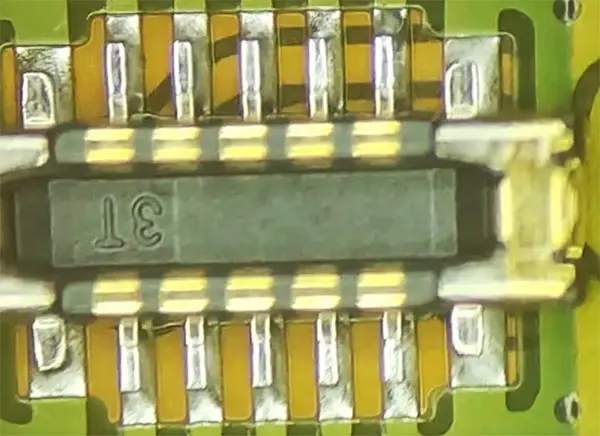
Conclusion
Quality control in the reflow soldering process is a core element of electronic assembly. Direct impact on the performance and reliability of the final product.
This paper systematically analyses the causes of typical reflow soldering defects.
These include cold solder joints, overheating, open circuits, short circuits, component displacement, and “tombstoning.”
Practical solutions are proposed. Multiple dimensions are considered.
These include soldering parameters, SMT placement, solder paste application quality, material pretreatment, and defect detection.
Implementing systematic quality control strategies can significantly reduce the defect rate, improve production yield, and enhance product competitiveness.
In the future, as electronic components continue to evolve toward miniaturisation and higher density, the reflow soldering process will continue to face new challenges.
This necessitates more in-depth research and practical application in areas such as process innovation, intelligent inspection, and interdisciplinary integration.